Category: main dish

  • Jackfruit Green Tinga Tacos, a Plant-Based Recipe

    Jackfruit Green Tinga Tacos, a Plant-Based Recipe

    “As long as I’m back for make-your-own-taco night, I’m in.” Spoiler: they are not back for make-your-own-taco night.

    The Ruins (2008), directed by Carter Smith and written by Scott Smith (writer of the novel of the same name) is bleak. Really bleak. There is no point that we believe the Greeks or a “world phone” will come through. It’s a long, slow demise into the killer plants.

    As unlikely as the premise sounds, The Ruins is legitimately terrifying. It’s frightening how quickly the characters slip from the safety of their mundane vacation and into the wild unknown. The film does some excellent work playing with body horror, a creeping, vining sense of dread, and the psychology of imminent doom.

    It’s not the way you want your Mexican vacation to end. Mexican vacation is for pools, beaches, and tacos.

    So of course we are making tacos inspired by The Ruins. These are spicy, green, and entirely plant based. Traditionally, tinga is made with shredded chicken, beef or pork. Jackfruit is an excellent stand in for any type of shredded meat, and as it doesn’t have a strong flavor, it can absorb the flavor of whatever sauce you simmer it in. We often have it BBQ style in sandwiches or tacos.

    For The Ruins however, I made a smokey green sauce. It’s very simple and made from few ingredients, but they balance each other out well. It’s tangy from tomatillos, spicy from jalapeños, herby from oregano. Garnish with anything lucious and green – avocado, green cabbage, lime. Cherry tomato flowers, optional.

    Jackfruit Green Tinga Tacos

    • 1 pound tomatillos, quartered
    • 1 onion, sliced into 1 inch chunks
    • 2 jalapeños, halved long ways
    • 6 cloves garlic, peeled
    • olive oil
    • 2 20 ounce cans jackfruit, drained and trimmed
    • 2 tablespoons sugar
    • 1 teaspoon oregano
    • salt to taste
    • 2 cups vegetable broth
    • Corn tortillas for serving. Avocado, shredded cabbage, lime to garnish. Quartered and seeded cherry tomatoes if you dare!

    Toss the tomatillos, onion, jalapeños, and garlic with olive oil and a sprinkle of salt, and and roast at 400 for 40-45 minutes, stirring and scraping every 10 minutes or so, until mushy and charred. Transfer to a food processor and grind until smooth. The tomatillos are quite tangy, so add enough sugar to mellow and balance, about 2 tablespoons. Salt to taste.

    Meanwhile, heat a tablespoon of olive oil in a pan or wok, and sauté jackfruit until it is starting to brown. Add tomatillo mixture, oregano, and 2 cups vegetable broth. Mix well. Cook until stewy, stirring often, and gently mashing the jackfruit until stringy.

    Serve with warm tortillas, lovely garnishes, Mexican-style red rice, and refried beans!

    First published on Nightmare on Film Street.


  • Winchester Fish and Fried Pickles

    Winchester Fish and Fried Pickles

    All Shaun’s girlfriend Liz wants is dinner at a nice restaurant, the place that does all the fish. The Winchester doesn’t even have proper food. It has plenty of nibbles though: Mini Cheddars. Twigglets. And my personal favorite, Hog Lumps. It’s the perfect place for a nice cold pint whilst waiting for the zombie apocalypse to blow over.

    Shaun of the Dead (2004) is a delightful horror comedy directed by Edgar Wright and cowritten by Wright and Simon Pegg who also stars as Shaun. He’s not a bad guy, but he’s directionless and ambitionless, more or less content to work his middling job by day and spend every evening in the same pub. The film is a hilarious if depressing commentary about how we drone through our daily lives, so much so that when the zombie apocalypse begins it’s almost indiscernible. Once they start attacking though, Shaun takes charge. Along with his best friend Ed, he manages to scoop up his very sweet mother who calls him “Pickle,” Liz, who has freshly broken up with him, and her flatmates, and lead them to the Winchester to hunker down.

    By the end, Shaun has grown as a person and manages to make enough changes to win Liz back. And while he may never be the type to take her to a fancy restaurant that does fish, he can at least take her to a pub that does fish and chips…maybe even the Winchester! It did get completely trashed by zombies so maybe when they renovate they’ll put in a kitchen.

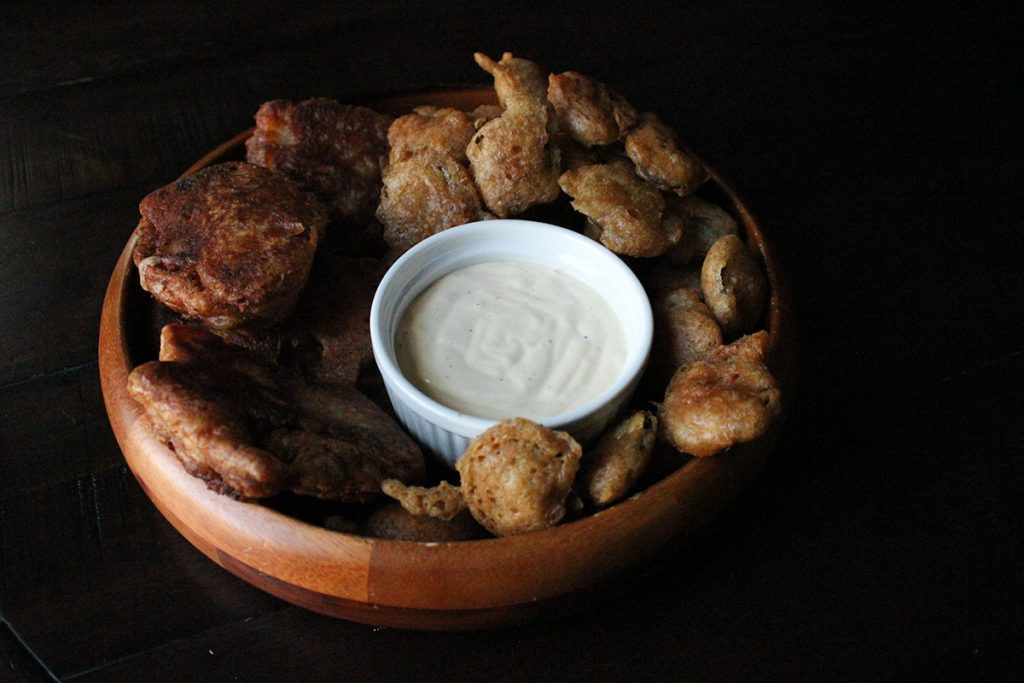
    I thought it would be fun to, instead of chips, make fried pickles to incorporate Shaun’s mother’s nickname for him. While fried pickles originated in the American south, they have been popping up on pub menus (or so says Google) and are the perfect accompaniment to a nice cold pint.

    Originally I was thinking to incorporate Hog Lumps somehow. I mean, with a name like that how could I not at least consider it? Turns out there are a lot of recipes online that use pork rinds as breading for low carb versions of fried fish and fried pickles…but after thinking about it for a minute, anything called “Keto” or “Whole 30” just didn’t feel very English pub-like. So I went with classic beer batter for both the fish and the pickles. For a dipping sauce, malt vinegar mayonnaise.

    Winchester Fish and Fried Pickles with Malt Vinegar Mayo

    For the malt vinegar mayo

    • 1/2 cup mayonnaise
    • 1 tablespoon malt vinegar
    • salt & pepper

    Whisk together mayonnaise and vinegar. Season with salt and pepper to taste.

    For the fish and fried pickles

    • 16 ounce jar dill pickle chips
    • 1 pound firm white fish fillets such as cod
    • 18 ounces beer (one and a half bottles – drink the rest!), I used Guiness
    • 2 eggs
    • 2 1/4 cups flour
    • 1 1/2 tablespoons baking soda
    • salt & pepper
    • vegetable oil for frying

    Heat a half inch oil in a frying pan on medium high (you may need to lower heat).

    Drain and dry the pickles and dry with a paper towel. Dry fish fillets thoroughly with paper towels and salt and pepper liberally on both sides.

    Whisk together beer and eggs. Separately, whisk together flour and baking soda and stir into the beer mixture. Season with a pinch of salt and some fresh cracked pepper, but not too much, being mindful that the pickles are already salty and the fish is also seasoned separately.

    Test a little of the batter in the oil to see if it is ready. Dip the pickles in the batter, letting excess drip off, and fry in small batches until golden, about 3-4 minutes, flipping half way. Remove to a paper towel.

    Dip fish in remaining batter and fry in batches until golden, 3/4 minutes each side.

    Serve hot with dipping sauce, extra malt vinegar, and lemon.

    First published on Nightmare on Film Street.

  • Ginger Steak Wraps with Ginger Tomato Chutney

    Ginger Steak Wraps with Ginger Tomato Chutney

    Ginger Snaps, the 2000 Canadian horror movie written and directed by John Fawcett, is all about transformation. It stars Katharine Isabelle and Emily Perkins as sisters Ginger and Brigitte, who are delightfully morbid (the opening sequence of their death-inspired school project photoshoot is fantastic), and grow up with only each other for friends and a death pact to seal their friendship and sisterhood.

    However, when Ginger is attacked by a mysterious creature, everything begins to change. There are so many themes that are well served by this werewolf narrative; adolescence and budding sexuality, sisterhood, loneliness, mortality, and how people change and relationships rarely stay the same.

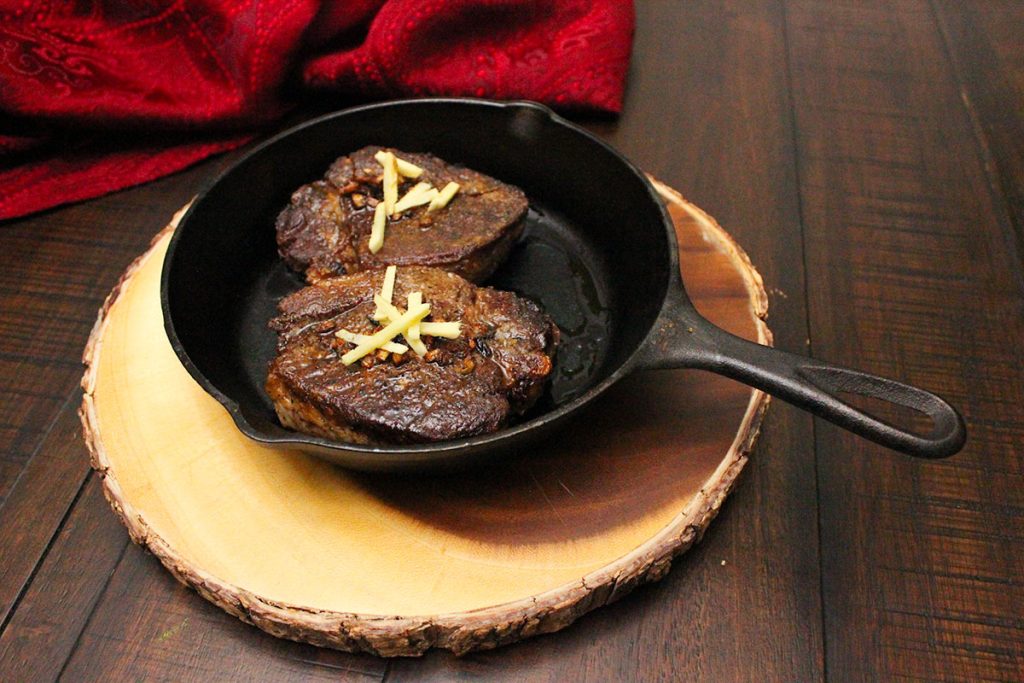
    Steak is probably pretty obvious for a werewolf inspired recipe (I also cooked up Universal Classic Monster-inspired Wolf Man Steaks with Silver Bullet Lemon Butter). Well, to be fair, gingersnap cookies are probably the most obvious, but steaks are a close second. However, these were an excellent excuse to use lots and lots of ginger, which I love, for a nice spin on a classic.

    Ginger Steaks

    • 2 fillets (or cut of your choice – I did filet mignon which was appropriately popular in the 90s/early 2000s just like this film)
    • coarse salt
    • fresh ground pepper
    • 2 tablespoons coconut oil
    • 2 tablespoons butter
    • 2 inches ginger, peeled and finely chopped (reserve some matchsticks for garnish)
    • spritz of lime juice

    For a detailed steak-cooking technique, I recommend this method from The Kitchn, but I’ll give you a quick run down. Pat steaks dry, and salt and pepper well on all sides. Allow to sit for 20 minutes at room temperature.

    Heat oven to 425°. Heat coconut oil in a cast iron skillet until screaming hot, don’t be afraid. I opened the windows and warned the kids that I’d probably set the smoke alarm off, which I did. Sear steaks for 5 minutes on each side then move to the oven for 5 minutes for medium well. Remove to a plate and allow to rest.

    Return the skillet to the stove and on medium heat, add butter, ginger, and lime juice. Cook, stirring, until slightly thickened and pour over steaks. Garnish with ginger matchsticks. Serve as is, or, once rested, slice steaks in strips against the grain.

    But we’re not done yet! I transformed this (eh? Ok I’m sorry that was really cheesy) into wraps with baby spinach and a ginger tomato chutney for even more gingery flavor. This also helps stretch an expensive cut of meat; two steaks fed 5 of us with leftovers (with soy and ginger marinated tempeh strips for a vegetarian version).

    Ginger Tomato Chutney

    • 2 tablespoons neutral flavored oil
    • 2 shallots, finely diced
    • 2 inches ginger, peeled and grated
    • 1/2 teaspoon garam masala
    • pinch cayenne (or more to your taste!)
    • 1/4 teaspoon turmeric
    • 1 can diced tomatoes
    • 3/4 teaspoon salt
    • 1 tablespoon brown sugar
    • spritz lime juice

    In a saucepan, heat oil until shimmering. Saute shallots until they begin to turn golden, then stir in ginger, garam masala, cayenne and turmeric and cook until fragrant. Add tomatoes, and cook, stirring often, until thick and jammy. Stir in brown sugar and lime juice and cook for just another minute and remove from heat. Taste and adjust seasoning if necessary, may need a pinch more salt.

    To make wraps, arrange a layer of baby spinach on flatbreads, then strips of gingery steak, top with a dollop of ginger tomato chutney, wrap, slice and serve.

    First published on Nightmare on Film Street.

  • Amity Island Shrimp Boats

    Amity Island Shrimp Boats

    This year marks the 45th anniversary of Jaws, the sharky summer blockbuster that terrified would-be beachgoers in theaters in 1975. Based on the novel by Peter Benchley and directed by Stephen Spielberg (who was only 27 at the time!), the film with its iconic soundtrack and clever editing became an instant classic.

    There’s been some biting comparisons drawn between the plot of Jaws and this particular Pandemic Summer. Much like police chief Martin Brody does of mayor Larry Vaughn, we question the wisdom of opening the beach. However, if you’re avoiding the beach from either fear of sickness or shark attack, you can still eat like you’re there! Here’s a summery seafood dish, the type you’d be served at a beachfront cafe, ready to be devoured.

    While Jaws takes place in the fictional town of Amity Island, New York, the movie was filmed in Martha’s Vineyard, Massachusetts. The summer colony provided just the atmosphere they were looking for – a charming vacation town whose tourist industry could be believably destroyed by a shark.

    Martha’s Vineyard is also known for its food, including fresh seafood dishes and even a signature salad. Shrimp and lobster rolls are popular in New England so were the inspiration for this recipe. While those are served on hot dog style buns, this is tweaked for the movie and served, of course, in a bread boat. The bread boats are filled with a lovely shrimp salad. It’s a classic New England style shrimp salad but the seasoning combination of sherry, lemon and tarragon make it extra elegant.

    The recipe serves 4, but can easily be doubled. After all, if you’re really hungry, you’re going to need a bigger boat.

    Amity Island Shrimp Boats

    • 1 pound shrimp, peeled
    • 1 tablespoon lemon juice
    • 1 tablespoon sherry
    • ½ cup celery, finely diced
    • 2 tablespoons shallot, finely diced
    • Zest of one lemon
    • 1 teaspoon dried tarragon
    • 2 heaping tablespoons mayonnaise
    • Olive oil
    • Two baby baguettes hollowed out (you could also do a French loaf. Save the bread scraps for bread crumbs)
    • Melted butter for brushing
    • Spinach leaves

    Marinate the shrimp in lemon juice and sherry. Let sit in the fridge for at least half an hour. In a large bowl, combine celery, shallot, tarragon, lemon zest and mayonnaise. Set aside. Heat a little olive oil in a frying pan on medium and cook shrimp with marinade, stirring and flipping, until pink, about 2-3 minutes. Cook thoroughly but be careful not to overcook, shrimp easily gets rubbery! Remove to a clean bowl and allow to cool. With a slotted spoon, fold shrimp into to the mayonnaise mixture. Add a teaspoon or two of the leftover cooked marinade liquid for flavor, and to thin the mayonnaise mixture a little so that it lightly coats the shrimp.

    Heat oven to 400°. Brush baguette boats with melted butter and toast in the oven until golden. Allow to cool slightly. Line the inside with spinach leaves and scoop full of the shrimp salad. Slice in halves or thirds to serve.


  • Mystery Pot Pies

    Mystery Pot Pies

    Knives Out, directed by Rian Johnson, is out this Thanksgiving weekend and promises to be a rollicking and hilarious murder mystery. Inspired by the likes of Clue, Gosford Park, and Agatha Christie mysteries, it stars, well, everyone – a brilliant ensemble cast led by Daniel Craig as Detective Benoit Blanc. Although it has a distinctly modern twist, it leans on many of the usual murder mystery tropes, with an eccentric family gathered to a remote mansion by its patriarch. He dies right away of course, and everyone’s a suspect.

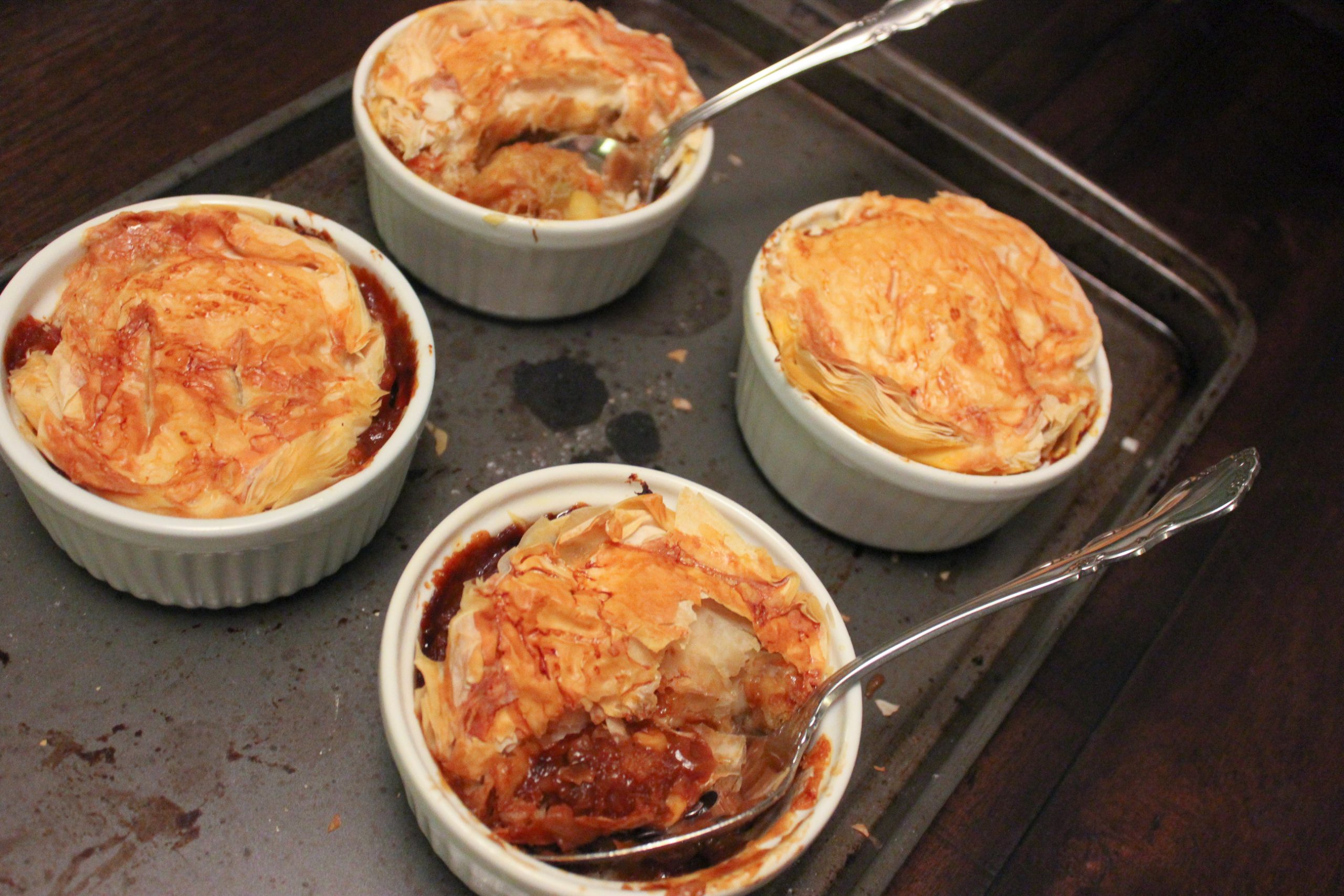
    When brainstorming recipes, I thought about the large, wealthy New England family which led me to all the WASPy classics. WASP food has a reputation for being bland and boring, but done well it can be comforting and delicious, and just the thing to calm familial dysfunction. Think pot pie, French onion soup, and especially as the movie is filmed in Boston, seafoods like lobster rolls, clam chowder, and crab cakes. I ended up with a mishmash of these classic dishes, with twin versions of pot pies in darling ramekins, topped by puff pastry.

    Although there are two distinct versions, this is a single recipe as single weird and winding as the film.

    Mystery Pot Pies (French Onion Pot Pie and Crab Chowder Pot Pie)

    For the roux

    • 2 tablespoons butter
    • 4 tablespoons flour

    In a small saucepan over medium low heat, stir together butter and flour. Stir until it is a light golden color, remove from heat, and reserve.

    For the French Onion Pot Pie

    • 1 1/2 tablespoons olive oil
    • 1 large yellow onion, quartered and thinly sliced
    • 3 sprigs thyme (leaves removed and roughly chopped)
    • Few cracks fresh black pepper
    • 1 teaspoon marmite (optional but recommended, adds umami flavor)
    • salt to taste (but I didn’t need to add any as the marmite is very salty)

    In a pan on medium low, heat olive oil and cook onion, stirring often, until very golden brown (I will not lie to you like so many recipes, this takes a long time so be patient). Stir in thyme, black pepper, and marmite.

    For the Crab Chowder Pot Pie

    • 1 1/2 tablespoons olive oil
    • 1 shallot, minced
    • 1 rib celery, diced
    • 1 medium carrot, diced
    • 1 medium small potato, diced
    • 8 ounces crab meat, cooked
    • 1 teaspoon Old Bay seasoning
    • zest of 1 lemon

    In a separate pan, heat olive oil, and sauce shallot until translucent. Stir in celery, carrot, potato, crab meat, Old Bay and lemon zest.

    To finish both

    • 3 cups vegetable broth
    • 2 tablespoons sherry
    • Handful croutons
    • 1/4 cup gruyere
    • 1 sheet puff pastry, thawed
    • 1 egg white, beaten with a tablespoon of water

    Heat oven to 375. Add 1 1/2 cups vegetable broth and half of the roux to each pan, and simmer each until each mixture is very thick. Divide the onion mixture between two ramekins, and the crab mixture between two more. To the onion ramekins, top with croutons and a sprinkle of gruyere. Roll out the puff pastry and cut circles the size of the ramekins. Top each, brush with egg white, cut a couple vents for each, and bake for 15-20 minutes, until golden brown.

    Fresh out of the oven they look almost the same – but I’m sure a good detective can figure out which is which!

  • Annie Wilkes’s MISERY Meatloaf

    Annie Wilkes’s MISERY Meatloaf

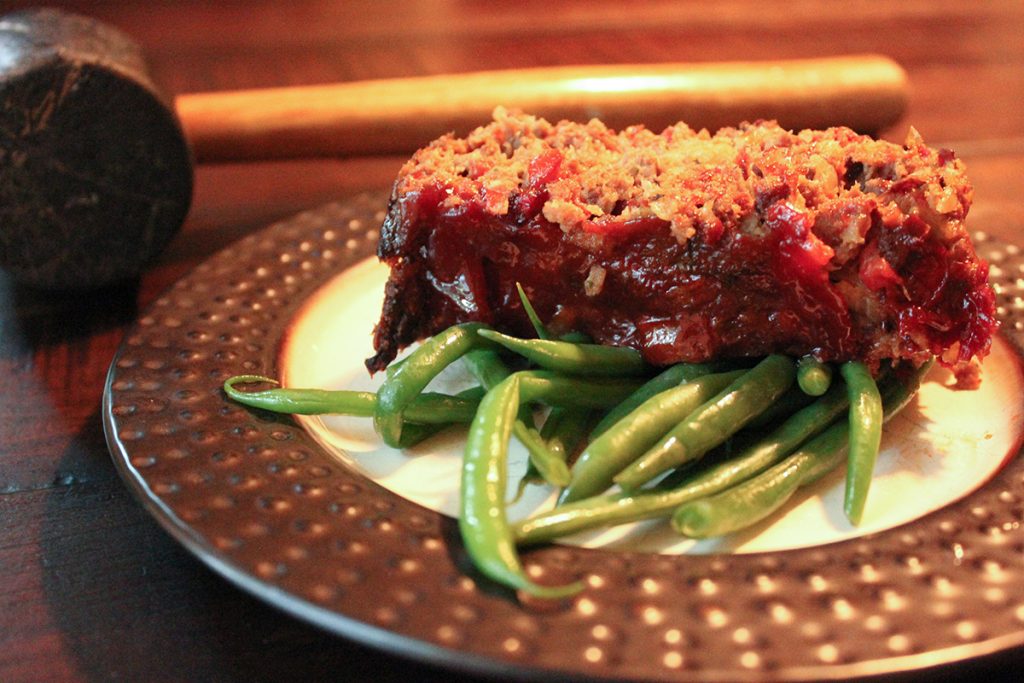
    Annie Wilkes may be one of the most deceptively terrifying characters in fiction, flipping from attentive nurse to unhinged fanatic in a sublime performance by Kathy Bates in the 1990 adaptation of Stephen King’s Misery. She’s a fearsome villain, but also complex, with many good qualities. She’s tenacious, lively, a voracious reader, skilled in medicine, critical of profanity, kind to animals, and to top it off it turns out she can cook!

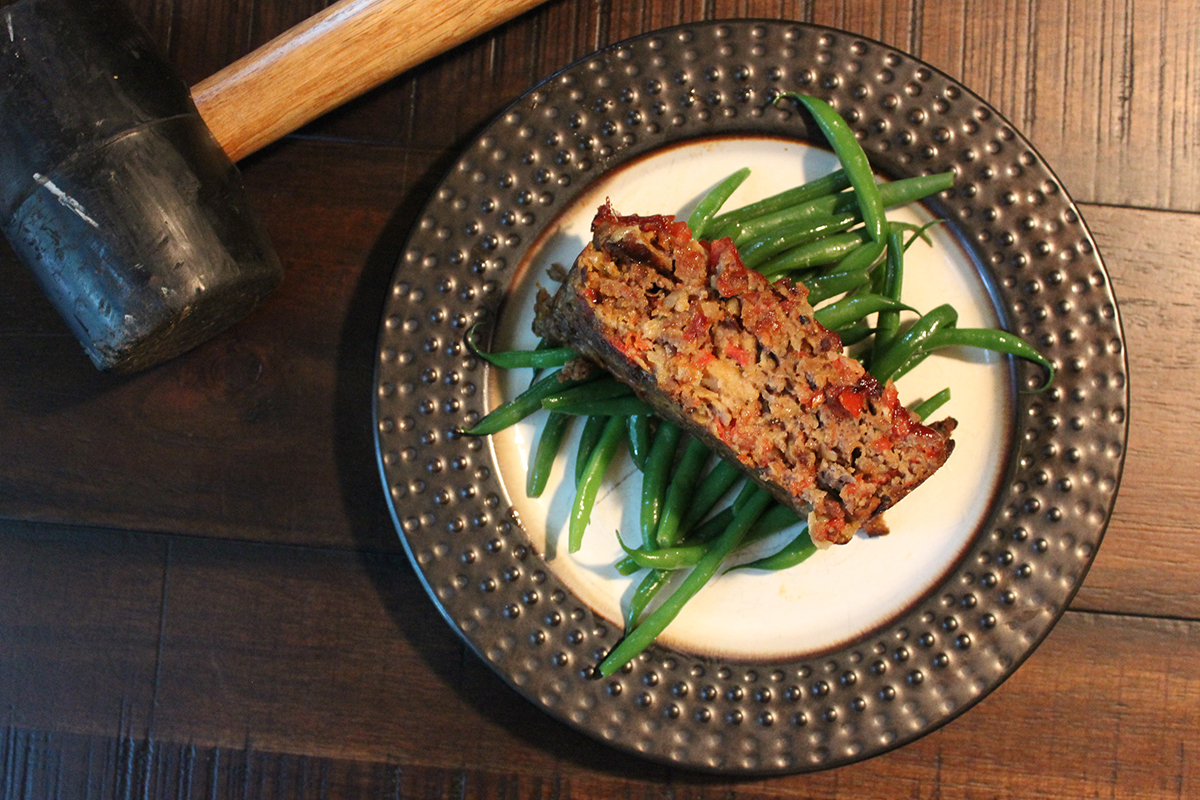
    Her home-cooked meatloaf is unique and lovingly prepared. You can’t find something like that in a restaurant in New York! And she’s not stingy with her secrets either. When asked, she offers “My secret is I always use fresh tomatoes, never canned, and to give it that extra zip I mix a little Spam with the ground beef!” 

    Now who knows how Annie Wilkes is procuring fresh tomatoes in snowbound Colorado, but in between all her stalking and hobbling, she gets it done. One trick I’ve learned for better year-round tomatoes, is to use romas (which have a longer season than other varieties) and to slow roast them. Somehow roasting makes even subpar tomatoes scrumptious. If you are as energetic as farmer Annie, you can roast summer tomatoes, then freeze and store them for 6 months, for even better fresh-tomato meatloaf year-round. In this recipe, since you’re already roasting your tomatoes, you can do your onions and garlic at the same time, so they all get that roasted caramelized sweetness before being added to the final product. 

    I have a not so secret love for the much-maligned Spam. In dishes like Korean kimchi jjigae and Hawaiian Spam musubi it’s delicious, and I applaud Annie for sneaking it into her meatloaf. The trick here is to crumble and pan fry it first. You’ll get maximum extra zip, and render out some of the fat that can make meatloaf gross and soggy. In fact, use the leanest ground beef you can find for this same reason. 

    For the rest, I kept the method and seasonings classic and simple. After all, Annie Wilkes is a simple girl, who knows that a simple home-cooked meal is how you can really show someone you’re their number one fan!

    Annie Wilkes’s MISERY Meatloaf

    • For the Loaf
    • 4-5 roma tomatoes, sliced vertically and seeds removed
    • 1 onion, halved and sliced
    • olive oil
    • salt and pepper
    • 6 ounces Spam (half a can), crumbled with a fork
    • 1 pound lean ground beef
    • 3/4 cup bread crumbs
    • 1/4 cup milk
    • 1 egg, beaten
    • 1 tablespoon Worcestershire sauce
    • 1/2 teaspoon salt
    • 1 teaspoon dried parsley
    • 1 teaspoon garlic power
    • few cracks ground black pepper

    For the Glaze, whisk together:

    • 1/4 cup ketchup
    • 2 tablespoons light brown sugar
    • 1 tablespoon Worcestershire sauce
    1. Heat oven to 400. On separate parchment-lined baking pans, spread tomatoes and onions in a single layer, toss with olive oil and sprinkle with salt. Roast until well cooked with a few brown and crispy parts, 25-30 minutes (onions will likely be done first). When they are cool enough to handle, chop them up.
    2. On medium-high, cook Spam in a dry pan until brown, remove to a paper towel-lined plate.
      Lower oven heat to 350.
    3. Add roasted tomatoes and onions, Spam, ground beef, bread crumbs, milk, egg, Worcestershire sauce, salt, parsley, garlic powder and pepper to a large bowl, and mix well. Press mixture into a parchment-lined 9×5 loaf pan. Spoon glaze over the top and spread.
    4. Bake for 55 minutes to an hour. Pull the loaf out with the parchment and let cool on a board 10-15 minutes before slicing.

    First published on Nightmare on Film Street.

  • Violet Beauregarde-inspired Three Course Dinner

    #FFDahlicious is a month for tasty eats inspired by Roald Dahl hosted by Katarina @ Pretty Cake Machine. Check the hashtag or the link up for lots of Dahl-inspired dishes.

    Violet Beauregarde, the gum-smacking, slang-slinging, disobedient daughter of a car salesman, is the second child to meet her demise in Willy Wonka’s chocolate factory, but not before enjoying a lovely three course meal in the form of gum. 

    Before she’s rolled away to be juiced, she enjoys tomato soup, roast beef with a baked potato, and then the cause of her downfall: blueberry pie. 

    Without Willy Wonka’s assistance, I was unable to create this gum exactly as it was described (probably a good thing), but I did create the meal that inspired it! This tomato soup was completely simple, yet fabulous thanks to the slow roasted tomatoes, it had become my go-to recipe. The roast beef was nicely cooked with a red wine gravy. And the blueberry pies were miniature with an almond crust, a sweet bite at the end of a lovely meal. Don’t feel bad for Violet, all in all it’s not a bad way to go.

    Violet Beauregarde’s Three Course Dinner


    Tomato Soup

    • 2 pounds roma tomatoes, cut into thick slices
    • 1 head garlic
    • 1/2 an onion, sliced
    • olive oil, salt & pepper
    • 5 cups chicken broth (homemade and flavorful if possible, I made mine from the bones of an Arabic style roast chicken)
    • cream to garnish
    Heat oven to 350°. Toss tomatoes with a good amount of olive oil, salt and pepper, and spread in a single layer on a baking sheet (or two if you don’t have a very large one). In another baking dish, toss the onions with olive oil, salt and pepper. Cut the top off a head of garlic and wrap it in foil, drizzled with a little olive oil. Put everything in the oven. Bake, flipping the tomatoes every half hour and stirring the onions once in awhile, until tomatoes are cooked and caramelizing and onion is golden (tomatoes will take about an hour and a half, onions probably only a half hour – check and make sure not to burn). Leave garlic in until roasted and soft, an hour to an hour and a half. Puree tomatoes, onions, and garlic in a blender with a little chicken broth, then pour into a pot. Stir in the rest of the chicken broth, adjusting seasoning if necessary, and gently heat, slowly simmering for 15 minutes or so. Serve hot with a little cream for garnish.

    Roast Beef

    I shall direct you to Simply Recipes, whose detailed method I followed pretty much exactly, including making the red wine gravy.

    (Mini) Blueberry Pie (with almond crust)

    For the crust
    • 2 cups almond flour
    • 2 tablespoons butter
    • 1 egg
    • good pinch salt
    Blitz together almond flour and butter in a food processor, then blitz in egg and salt. Press into a prepared mini muffin tin and bake (before filling) at 350° for 8 minutes. For the filling I made this lightly sweetened, still very tart. You can increase the amount of honey to 1/2 cup if you’d like.
    • 1 pint blueberries
    • 1/4 cup honey
    • pinch salt
    • 1 tablespoon cornstarch
    In a small saucepan, heat half the blueberries with honey and salt. Mix cornstarch in 1/4 cup of water and add to the saucepan, stirring until blueberries are broken down and mixture is thick. Remove from heat, and stir remaining blueberries into the mixture. Spoon into the crusts in the mini muffin tin and bake at 350° for 20 minutes. Cool in the muffin tin before removing.

    Recipe for Fiction Kitchen Episode 21: Charlie and the Chocolate Factory in which Carrie and Diana talk the book and movies, including awful and/or bland children, mint sugar grass production techniques, wistful buttercup sipping, questionable treatment of animals and small humans, a little chocolate and a lot of vegetables.

  • Snow White Roasted Vegetables and Sausage with Red Wine Reduction

    Snow White Roasted Vegetables and Sausage with Red Wine Reduction

    In the same way folklore transforms over time, 2018’s Suspiria is a thorough retelling of the classic 1977 Dario Argento Giallo horror. Though both films tell the twisted fairy tale of a beautiful, talented and determined American ballerina coming to an elite, witch-inhabited dance school in Germany, the space between the plot points is distorted and the tone completely shifted. The original is drenched in a vibrant, almost garish color palette and an intense, powerful Goblin soundtrack, while the reimagining directed by Luca Guadagnino is soft and de-saturated with the dreamy, droney sounds of Thom Yorke. More in the Nightmare on Filmstreet review.

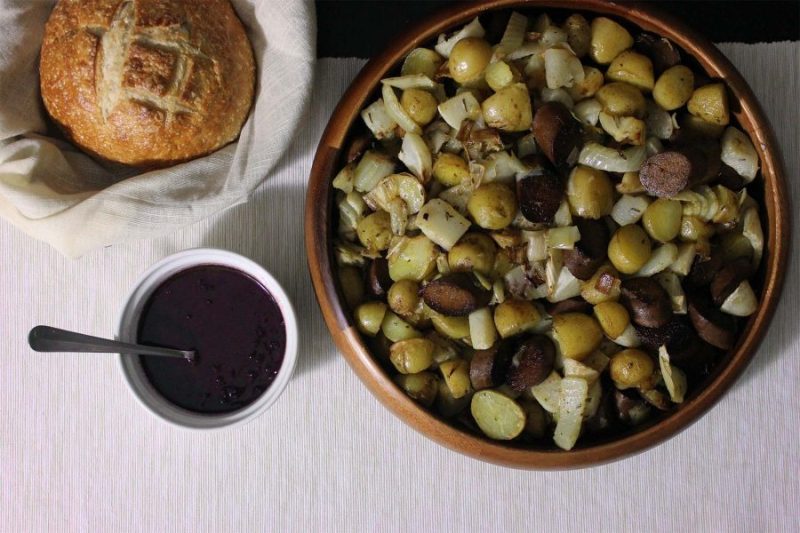
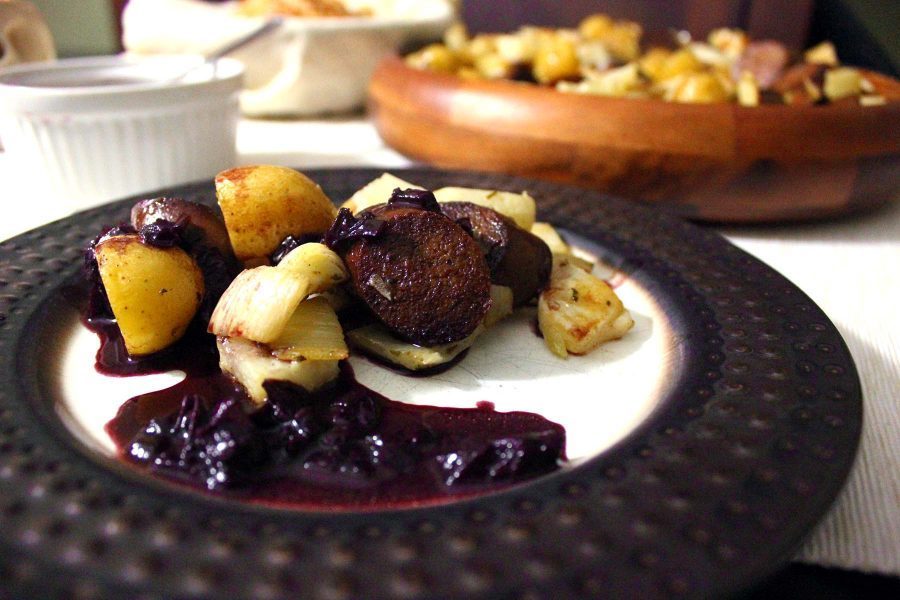
    Much like the films, this dish is heavily inspired by Snow White. Indeed our heroine, Susie Bannion (played in 1977 by Jessica Harper and in 2018 by Dakota Johnson), is a modern Snow White, who wanders into an enchanted world and has to fight attempts on her life from a jealous crone. As the Grimm brother’s Snow White tale comes from Germany and Suspiria takes place in Berlin, I definitely wanted the dish to have a German leaning, so chose a mixture of vegetables to roast with sausage.

    Color is so symbolic in both films, with the sweet ingenues often dressed in white, and red used in violent, jarring ways. The veggies used here are all white: darling little creamer potatoes, fennel, turnips and garlic. To accompany them I made a rich red wine reduction, also reminiscent of the wine Susie’s doctor gives her to drug her when she becomes too suspicious….it’s suspiciously delicious.

    Snow White Roasted Vegetables and Sausage with Red Wine Reduction

    For the veggies and sausage
    • 1 1/2 pounds yellow creamer potatoes, halved or quartered
    • 2 large bulbs fennel, trimmed and chopped into large chunks
    • 2 medium turnips, peeled and chopped into large chunks
    • 7 large cloves garlic, gently crushed and peeled
    • olive oil
    • 2 sprigs rosemary, finely chopped
    • 1 teaspoon coarse salt
    • 1/2 teaspoon white pepper
    • 1 pound peppery or sweet German or Eastern European-style sausage (we made this vegetarian by using Polish-style soy sausages), thickly sliced

    Heat oven to 425°. Divide potatoes, fennel, turnips and garlic into two large baking dishes. Drizzle with a generous amount of olive oil, sprinkle with salt and white pepper, toss with your hands and spread into a single even layer. Bake for 20 minutes, then stir/flip, making sure to scrape up any brown bits on the bottom of the dish, spread evenly again and bake for 20 minutes more.

    Meanwhile, heat a little olive oil in a pan and brown the sausage in batches, removing to a plate. After the first 40 minutes of roasting, reduce oven heat to 350° and divide sausage between the dishes. Bake for another 20 minutes. Check the veggies at this point; they should be very soft, some gently caramelized, and the potatoes and turnips not mushy but easily pierced with a fork. Bake another 10-20 minutes until they reach desired doneness. Transfer to a serving dish.

    For red wine reduction
    • 2 tablespoons butter, divided
    • 1 medium shallot, finely chopped
    • 1 cup vegetable broth
    • 1 cup red wine

    In a saucepan, heat 1 tablespoon of the butter and cook shallot until golden. Add vegetable broth and red wine and stir. Bring to a low simmer and cook, stirring occasionally, until the mixture has reduced to about a third of its volume. Remove from heat and stir in the remaining tablespoon butter.

    To serve, spoon vegetables onto a plate and drizzle with the red wine reduction. Serve with warm, crusty bread.

    Suspiria is now playing in theatres.

    First published on Nightmare on Film Street.

  • Cinderella Cassoulet

    Cinderella Cassoulet


    Shake and quiver, little tree,
    Throw gold and silver down to me.

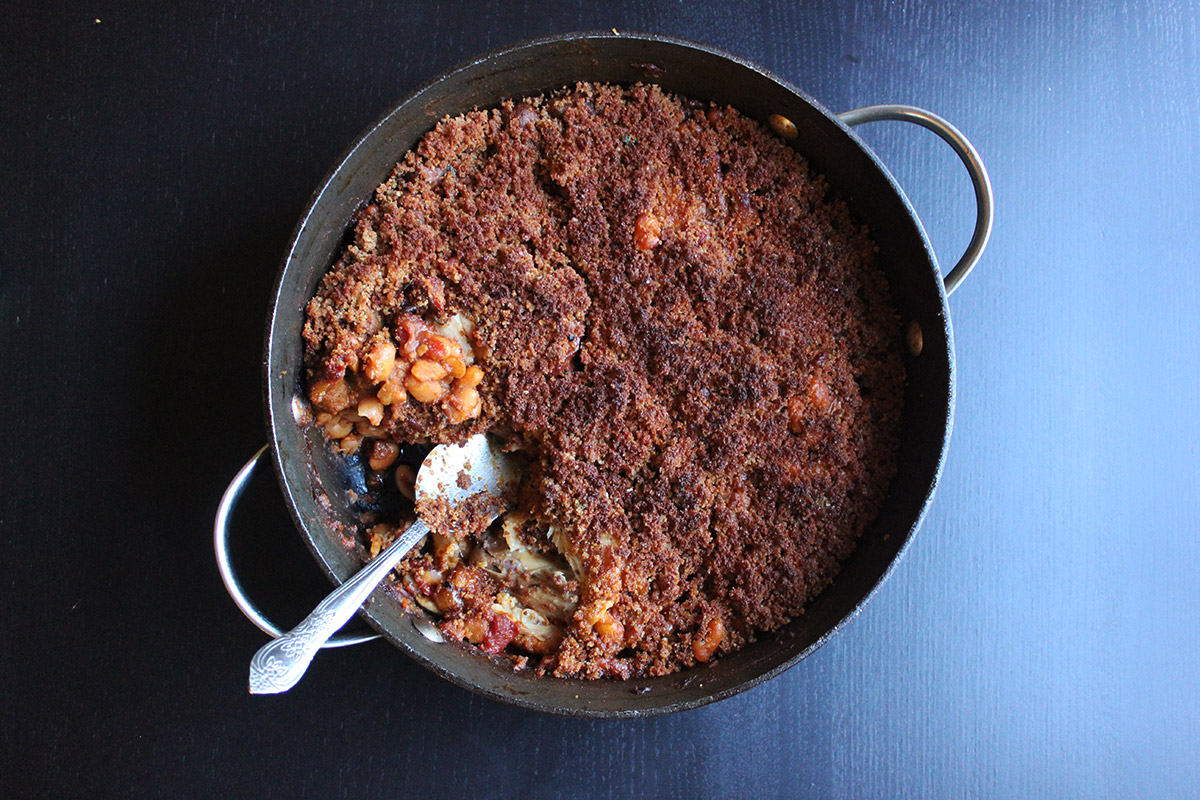
    This cassoulet is “authentic” the same way Cinderella in various film adaptations is “French.” Which is to say not really, but I think it definitely captures the spirit. It’s hearty and simple, made with common ingredients so it suits our modern peasant lifestyle. That means no duck, although I eventually want to make this exact dish using duck fat as the cooking oil once I get my hands on some, and it’s fairly quick, so perfect for very busy girls who have to sleep by the fire and wait on their hideous step-families.

    A cooking vessel that travels from stovetop to oven is ideal, but you could certainly make this stovetop then transfer to a baking dish before you top with breadcrumbs.

    Cinderella Cassoulet

    • olive oil
    • salt & pepper
    • 1 pound bone-in, skin-on chicken thighs
    • 1 pound chicken sausage, cut on the bias into large chunks
    • 1 onion, chopped
    • 4 cloves garlic, grated
    • 1 tablespoon paprika
    • 1 14.5 ounce can diced tomatoes (or 3-4 fresh, chopped)
    • 2 15 ounce cans great northern beans, rinsed and drained
    • about 3 slices bread, thoroughly toasted, or about 1 cup breadcrumbs
    • herbs – I used a few sprigs fresh thyme and a pinch of dried oregano, but you can use what you have on hand

    Heat a small amount of olive oil on medium high in a heavy-bottomed pot. Sprinkle chicken thighs with salt and pepper (just a little salt or the dish will be way too salty by the end), and brown well on both sides. Remove to a plate, and pour off all but a tablespoon or two of the oil. Brown the sausages and remove them to the plate.

    Lower the heat to medium and saute the onion with just a sprinkle of salt, until golden brown. Add the garlic, and stir for a minute or two, then add the paprika and stir for a minute. Add the tomatoes with another small sprinkle of salt, and cook, stirring, until they are well broken down. Add the beans, the chicken, and the sausage, and mix well. Add enough water to almost cover the chicken, cover, and simmer for 20 minutes or so until the chicken is well cooked through (stir occasionally and lower heat if necessary to keep from burning). Remove the lid, taste and adjust seasoning. Cook for a few minutes uncovered to thicken the sauce up if necessary.

    While the chicken is cooking, in a food processor blitz the bread into breadcrumbs, and add herbs, a small pinch of salt, and a couple tablespoons olive oil.

    Heat broiler. Smooth the chicken and beans mixture evenly and sprinkle breadcrumbs over the top. Heat under the broiler just a few minutes, until breadcrumbs are nice and brown.

    Serve hot!

    I referenced a couple of great recipes on Serious Eats:

    Recipe for Fiction Kitchen Episode 11: CINDERELLA in which Diana and Carrie discuss Disney’s new 2015 movie, Cinderella, the original animated film, as well as Cinderella stories from all over the world! We talk pumpkins, kindness = vegetarianism, practical meanies vs. gentlehearted non-planners, talking fish, gifting trees, and comfortable footwear.

    Whimsically morbid illustration by Ester Coonfield.

    There are Cinderella stories from all over the world, but I do love the Grimm brother’s version with the magical birds, silvery dress shook down from a hazel tree, and the stepsisters, desperately willing to mangle their feet, who get their eyes pecked out by pigeons for their wickedness at the end.

    Cinderella

    A rich man’s wife became sick, and when she felt that her end was drawing near, she called her only daughter to her bedside and said, “Dear child, remain pious and good, and then our dear God will always protect you, and I will look down on you from heaven and be near you.” With this she closed her eyes and died.

    The girl went out to her mother’s grave every day and wept, and she remained pious and good. When winter came the snow spread a white cloth over the grave, and when the spring sun had removed it again, the man took himself another wife.

    This wife brought two daughters into the house with her. They were beautiful, with fair faces, but evil and dark hearts. Times soon grew very bad for the poor stepchild.

    “Why should that stupid goose sit in the parlor with us?” they said. “If she wants to eat bread, then she will have to earn it. Out with this kitchen maid!”

    They took her beautiful clothes away from her, dressed her in an old gray smock, and gave her wooden shoes. “Just look at the proud princess! How decked out she is!” they shouted and laughed as they led her into the kitchen.

    There she had to do hard work from morning until evening, get up before daybreak, carry water, make the fires, cook, and wash. Besides this, the sisters did everything imaginable to hurt her. They made fun of her, scattered peas and lentils into the ashes for her, so that she had to sit and pick them out again. In the evening when she had worked herself weary, there was no bed for her. Instead she had to sleep by the hearth in the ashes. And because she always looked dusty and dirty, they called her Cinderella.

    One day it happened that the father was going to the fair, and he asked his two stepdaughters what he should bring back for them.

    “Beautiful dresses,” said the one.

    “Pearls and jewels,” said the other.

    “And you, Cinderella,” he said, “what do you want?”

    “Father, break off for me the first twig that brushes against your hat on your way home.”

    So he bought beautiful dresses, pearls, and jewels for his two stepdaughters. On his way home, as he was riding through a green thicket, a hazel twig brushed against him and knocked off his hat. Then he broke off the twig and took it with him. Arriving home, he gave his stepdaughters the things that they had asked for, and he gave Cinderella the twig from the hazel bush.

    Cinderella thanked him, went to her mother’s grave, and planted the branch on it, and she wept so much that her tears fell upon it and watered it. It grew and became a beautiful tree.

    Cinderella went to this tree three times every day, and beneath it she wept and prayed. A white bird came to the tree every time, and whenever she expressed a wish, the bird would throw down to her what she had wished for.

    Now it happened that the king proclaimed a festival that was to last three days. All the beautiful young girls in the land were invited, so that his son could select a bride for himself. When the two stepsisters heard that they too had been invited, they were in high spirits.

    They called Cinderella, saying, “Comb our hair for us. Brush our shoes and fasten our buckles. We are going to the festival at the king’s castle.”

    Cinderella obeyed, but wept, because she too would have liked to go to the dance with them. She begged her stepmother to allow her to go.

    “You, Cinderella?” she said. “You, all covered with dust and dirt, and you want to go to the festival?. You have neither clothes nor shoes, and yet you want to dance!”

    However, because Cinderella kept asking, the stepmother finally said, “I have scattered a bowl of lentils into the ashes for you. If you can pick them out again in two hours, then you may go with us.”

    The girl went through the back door into the garden, and called out, “You tame pigeons, you turtledoves, and all you birds beneath the sky, come and help me to gather:

    The good ones go into the pot,
    The bad ones go into your crop.

    Two white pigeons came in through the kitchen window, and then the turtledoves, and finally all the birds beneath the sky came whirring and swarming in, and lit around the ashes. The pigeons nodded their heads and began to pick, pick, pick, pick. And the others also began to pick, pick, pick, pick. They gathered all the good grains into the bowl. Hardly one hour had passed before they were finished, and they all flew out again.

    The girl took the bowl to her stepmother, and was happy, thinking that now she would be allowed to go to the festival with them.

    But the stepmother said, “No, Cinderella, you have no clothes, and you don’t know how to dance. Everyone would only laugh at you.”

    Cinderella began to cry, and then the stepmother said, “You may go if you are able to pick two bowls of lentils out of the ashes for me in one hour,” thinking to herself, “She will never be able to do that.”

    The girl went through the back door into the garden, and called out, “You tame pigeons, you turtledoves, and all you birds beneath the sky, come and help me to gather:

    The good ones go into the pot,
    The bad ones go into your crop.

    Two white pigeons came in through the kitchen window, and then the turtledoves, and finally all the birds beneath the sky came whirring and swarming in, and lit around the ashes. The pigeons nodded their heads and began to pick, pick, pick, pick. And the others also began to pick, pick, pick, pick. They gathered all the good grains into the bowls. Before a half hour had passed they were finished, and they all flew out again.

    The girl took the bowls to her stepmother, and was happy, thinking that now she would be allowed to go to the festival with them.

    But the stepmother said, “It’s no use. You are not coming with us, for you have no clothes, and you don’t know how to dance. We would be ashamed of you.” With this she turned her back on Cinderella, and hurried away with her two proud daughters.

    Now that no one else was at home, Cinderella went to her mother’s grave beneath the hazel tree, and cried out:

    Shake and quiver, little tree,
    Throw gold and silver down to me.

    Then the bird threw a gold and silver dress down to her, and slippers embroidered with silk and silver. She quickly put on the dress and went to the festival.

    Her stepsisters and her stepmother did not recognize her. They thought she must be a foreign princess, for she looked so beautiful in the golden dress. They never once thought it was Cinderella, for they thought that she was sitting at home in the dirt, looking for lentils in the ashes.

    The prince approached her, took her by the hand, and danced with her. Furthermore, he would dance with no one else. He never let go of her hand, and whenever anyone else came and asked her to dance, he would say, “She is my dance partner.”

    She danced until evening, and then she wanted to go home. But the prince said, “I will go along and escort you,” for he wanted to see to whom the beautiful girl belonged. However, she eluded him and jumped into the pigeon coop. The prince waited until her father came, and then he told him that the unknown girl had jumped into the pigeon coop.

    The old man thought, “Could it be Cinderella?”

    He had them bring him an ax and a pick so that he could break the pigeon coop apart, but no one was inside. When they got home Cinderella was lying in the ashes, dressed in her dirty clothes. A dim little oil-lamp was burning in the fireplace. Cinderella had quickly jumped down from the back of the pigeon coop and had run to the hazel tree. There she had taken off her beautiful clothes and laid them on the grave, and the bird had taken them away again. Then, dressed in her gray smock, she had returned to the ashes in the kitchen.

    The next day when the festival began anew, and her parents and her stepsisters had gone again, Cinderella went to the hazel tree and said:

    Shake and quiver, little tree,
    Throw gold and silver down to me.

    Then the bird threw down an even more magnificent dress than on the preceding day. When Cinderella appeared at the festival in this dress, everyone was astonished at her beauty. The prince had waited until she came, then immediately took her by the hand, and danced only with her. When others came and asked her to dance with them, he said, “She is my dance partner.”

    When evening came she wanted to leave, and the prince followed her, wanting to see into which house she went. But she ran away from him and into the garden behind the house. A beautiful tall tree stood there, on which hung the most magnificent pears. She climbed as nimbly as a squirrel into the branches, and the prince did not know where she had gone. He waited until her father came, then said to him, “The unknown girl has eluded me, and I believe she has climbed up the pear tree.

    The father thought, “Could it be Cinderella?” He had an ax brought to him and cut down the tree, but no one was in it. When they came to the kitchen, Cinderella was lying there in the ashes as usual, for she had jumped down from the other side of the tree, had taken the beautiful dress back to the bird in the hazel tree, and had put on her gray smock.

    On the third day, when her parents and sisters had gone away, Cinderella went again to her mother’s grave and said to the tree:

    Shake and quiver, little tree,
    Throw gold and silver down to me.

    This time the bird threw down to her a dress that was more splendid and magnificent than any she had yet had, and the slippers were of pure gold. When she arrived at the festival in this dress, everyone was so astonished that they did not know what to say. The prince danced only with her, and whenever anyone else asked her to dance, he would say, “She is my dance partner.”

    When evening came Cinderella wanted to leave, and the prince tried to escort her, but she ran away from him so quickly that he could not follow her. The prince, however, had set a trap. He had had the entire stairway smeared with pitch. When she ran down the stairs, her left slipper stuck in the pitch. The prince picked it up. It was small and dainty, and of pure gold.

    The next morning, he went with it to the man, and said to him, “No one shall be my wife except for the one whose foot fits this golden shoe.”

    The two sisters were happy to hear this, for they had pretty feet. With her mother standing by, the older one took the shoe into her bedroom to try it on. She could not get her big toe into it, for the shoe was too small for her. Then her mother gave her a knife and said, “Cut off your toe. When you are queen you will no longer have to go on foot.”

    The girl cut off her toe, forced her foot into the shoe, swallowed the pain, and went out to the prince. He took her on his horse as his bride and rode away with her. However, they had to ride past the grave, and there, on the hazel tree, sat the two pigeons, crying out:

    Rook di goo, rook di goo!
    There’s blood in the shoe.
    The shoe is too tight,
    This bride is not right!

    Then he looked at her foot and saw how the blood was running from it. He turned his horse around and took the false bride home again, saying that she was not the right one, and that the other sister should try on the shoe. She went into her bedroom, and got her toes into the shoe all right, but her heel was too large.
    Then her mother gave her a knife, and said, “Cut a piece off your heel. When you are queen you will no longer have to go on foot.”

    The girl cut a piece off her heel, forced her foot into the shoe, swallowed the pain, and went out to the prince. He took her on his horse as his bride and rode away with her. When they passed the hazel tree, the two pigeons were sitting in it, and they cried out:

    Rook di goo, rook di goo!
    There’s blood in the shoe.
    The shoe is too tight,
    This bride is not right!

    He looked down at her foot and saw how the blood was running out of her shoe, and how it had stained her white stocking all red. Then he turned his horse around and took the false bride home again.

    “This is not the right one, either,” he said. “Don’t you have another daughter?”

    “No,” said the man. “There is only a deformed little Cinderella from my first wife, but she cannot possibly be the bride.”

    The prince told him to send her to him, but the mother answered, “Oh, no, she is much too dirty. She cannot be seen.”

    But the prince insisted on it, and they had to call Cinderella. She first washed her hands and face clean, and then went and bowed down before the prince, who gave her the golden shoe. She sat down on a stool, pulled her foot out of the heavy wooden shoe, and put it into the slipper, and it fitted her perfectly.

    When she stood up the prince looked into her face, and he recognized the beautiful girl who had danced with him. He cried out, “She is my true bride.”

    The stepmother and the two sisters were horrified and turned pale with anger. The prince, however, took Cinderella onto his horse and rode away with her. As they passed by the hazel tree, the two white pigeons cried out:

    Rook di goo, rook di goo!
    No blood’s in the shoe.
    The shoe’s not too tight,
    This bride is right!

    After they had cried this out, they both flew down and lit on Cinderella’s shoulders, one on the right, the other on the left, and remained sitting there.

    When the wedding with the prince was to be held, the two false sisters came, wanting to gain favor with Cinderella and to share her good fortune. When the bridal couple walked into the church, the older sister walked on their right side and the younger on their left side, and the pigeons pecked out one eye from each of them. Afterwards, as they came out of the church, the older one was on the left side, and the younger one on the right side, and then the pigeons pecked out the other eye from each of them. And thus, for their wickedness and falsehood, they were punished with blindness as long as they lived.


  • Creepy Pasta: Squid Ink Pasta with Octopus and Burrata

    Creepy Pasta: Squid Ink Pasta with Octopus and Burrata

    The Slender Man mythology, originating from a creepypasta story on the Something Awful forums sometime in 2009, has wound its way through our society, from spooky Internet meme to real life crime. Most recently, the character appears in the film Slender Man, directed by Sylvain White (who has directed episodes of The Americans and Sleepy Hollow). It was written by David Burke, and staring Joey King (The Conjuring), Julia Goldani Telles, Jaz Sinclair, Annalise Basso and Javier Botet as the titular character.

    Though the film itself may feel disappointingly thin (you can read the Nightmare on Filmstreet review here), the folklore itself is fascinating and it’s not hard to see how this spooky tale went viral. Slender Man is a supernatural figure, unnaturally tall with long, Lovecraftian tentacle-like arms, who wears a suit, and has a stark face without features. He dwells in the dark woods , and snatches children in the night. An insidious monster, he’s shadowy, has unknown motivations, and preys on the most innocent people in our society.

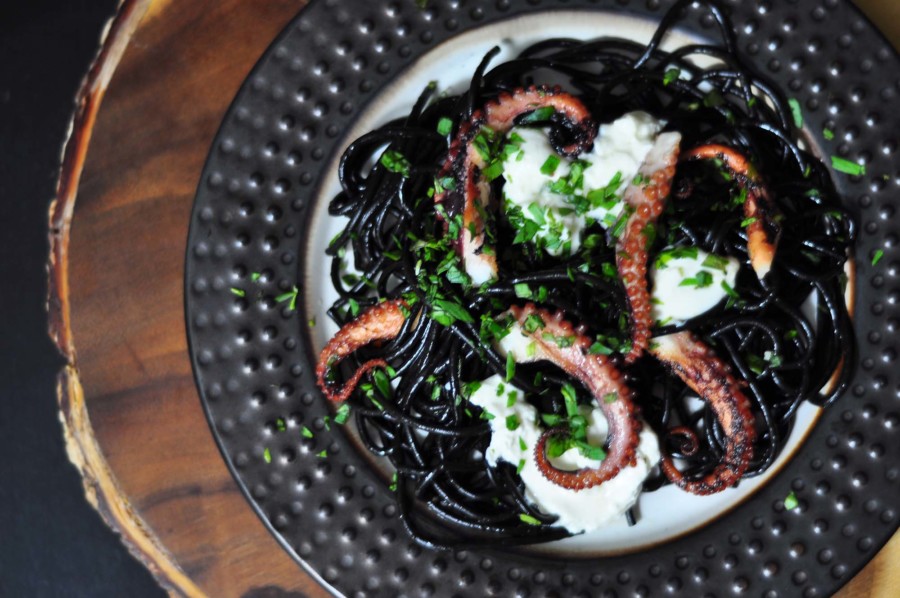
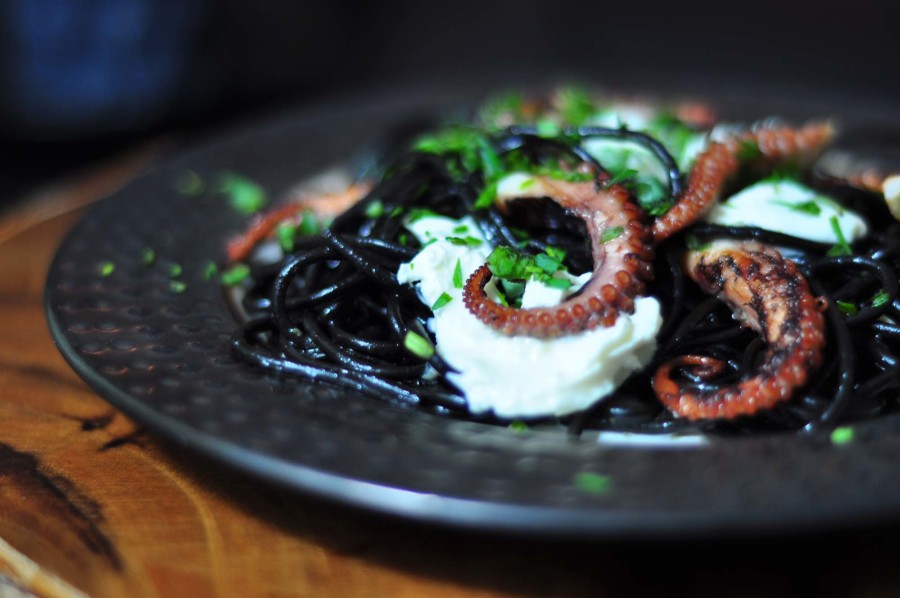
    So what are we cooking up inspired by the most famous advent of Internet folklore, Slender Man? An elegant and very literal Creepy Pasta! Squid ink is what makes this spaghetti inky and black; the aesthetic is perfect, and it’s tasteless so you can cook it the same as any other spaghetti. Burrata cheese is pale and striking like Slender Man’s featureless visage. It’s lovely and creamy in this dish (if you can’t find burrata, fresh mozzarella would work as well), and the tarragon that seasons it is fragrant greenery that could be foraged in his woodsy home. The ingredients marry together like an evil plan.

    If ink black pasta isn’t enough, it’s the octopus tentacles that take this dish into full creepypasta territory. They look impressive, and may seem daunting, but octopus is actually not too difficult to cook. It just takes a little patience stalking – I mean watching over – your cooking pot. Octopus can be rubbery, but slowly simmering it in a flavorful liquid for a long time yields tender tendrils that you can coil over your final dish.

    Creepy Pasta (Squid Ink Pasta with Octopus and Burrata)

    For the octopus

    • 1 pound octopus, cleaned and rinsed
    • 3 tablespoons olive oil, divided
    • 1 lemon, quartered
    • 3 garlic cloves, smashed

    In a large pot, heat 2 tablespoons olive oil and place the lemon slices, skin down, for several minutes until charred. Charring the lemon will give a stronger lemony flavor. Add garlic cloves and stir until fragrant, being careful not to burn. Add several cups of water and bring to a low simmer on medium low heat. Gently lower octopus into the pot, and if necessary add enough water to cover. Simmer the octopus until very tender, about hour and a half, checking occasionally for water level.

    Drain and gently remove octopus and pat dry. Cut tentacles off the head (which you can discard). In a small pan, heat 1 tablespoon olive oil and sear tentacles on both sides until lightly golden. Remove and set aside.

    For the pasta

    • 4 ounces squid ink pasta
    • 3 tablespoons olive oil
    • 3 garlic cloves, sliced
    • 1/4 cup white wine
    • juice of half a lemon
    • salt to taste
    • 1 4 ounce ball burrata, torn
    • small handful tarragon, finely chopped

    Cook pasta al dente in well-salted water according to package directions. Before draining, reserve a half cup or so of the pasta water.

    In a large pan, heat olive oil and saute garlic until lightly golden. Add white wine, lemon juice, and a pinch of salt, and cook until liquid is reduced and mostly cooked off. Add pasta to the pan and toss to coat, adding pasta water a tablespoonful at a time until desired consistency (liquid should just coat pasta but not be soupy).

    Serve on a large plate; arrange torn burrata and octopus tentacles on top, drizzle with olive oil, and sprinkle with chopped tarragon. Serve hot!

    First published on Nightmare on Film Street.