Category: main dish

  • Frankenweenies

    Frankenweenies

    Frankenweenie is one of those spooky Tim Burton stop motion animation features that I adore. The story is simple and sweet, a young Victor Frankenstein who uses Science! to bring his beloved dog Sparky back from an untimely end. It’s stylishly black and white, and draws heavily from vintage monster movies.

    It takes place in the charming town of New Holland, where each of the school children are hilariously creepy in their own way – my favorite is the weird blond girl who has a pretty Victorian bedroom and makes divinations from her cat’s litter box (“you’ll dream of me one day, won’t you kitty??”)

    There’s a good bit of food in the movie, including Mr. Frankenstein using fondue to make a point about compromise – aka no one getting what they want – and Mrs. Frankenstein has a classic housewife thing going and spends a lot of time in the kitchen making waffles and cookies and other homey foods. There’s even an actual recipe from a cookbook for Double Dutch Cherry Cupcakes (the town’s Dutch Day Festival is a fall carnival) which of course I’ll try at some point. There’s some good carnival food too that proves useful – salty popcorn is surprisingly effective for defeating reanimated sea monkeys.

    What made me really fall in love with it was the ending. (Beware, spoilers for Frankenweenie). Whereas I thought it was going to be a bland story of dealing with loss, instead the message is about using all your power to hold on to what you love. Maybe not the healthier of the two messages? But definitely the more interesting.

    For this recipe I cobbled together a few ingredients, electrified it with some savory seasonings, and served it up hotdog style – it’s aliiiive!

    Frankenweenies

    • 1 pound ground beef
    • 1 pound ground chicken
    • 2 slices bread
    • 2 tablespoons melted butter
    • 4 cloves garlic, grated
    • 1 Granny Smith apple, peeled and finely chopped
    • good palmful sage, finely chopped
    • 2 teaspoons salt (and an extra pinch)
    • fresh cracked pepper
    • oil for frying

    Blitz the bread into soft crumbs in a food processor. In a large bowl, combine breadcrumbs, melted butter, garlic, apple, sage, salt and pepper. Add beef and chicken and mix well.

    In a frying pan, heat a small amount of oil. Shape the meat mixture into long sausage shapes and fry in batches, rolling to brown on all sides, adding more oil as necessary. Drain on a paper towel.

    Serve on potato hotdog buns with lots of dijon mustard!

    I’ve been listening to a lot of Bloody Good Horror podcasts lately; they did NOT like this movie. It’s worth a listen though, because what they say about it is not wrong – they dislike the super dry humor, the too dark imagery, and the muddied end message. I liked it for all the reasons they didn’t; at one point they ask, “who is this movie for??” to which I answer “for me!” It’s not going to be everyone’s dog biscuit, but it hits all the quadrants (spooky, stylish, quirky and sweet) of the things I love.
  • Mawmenny

    Mawmenny

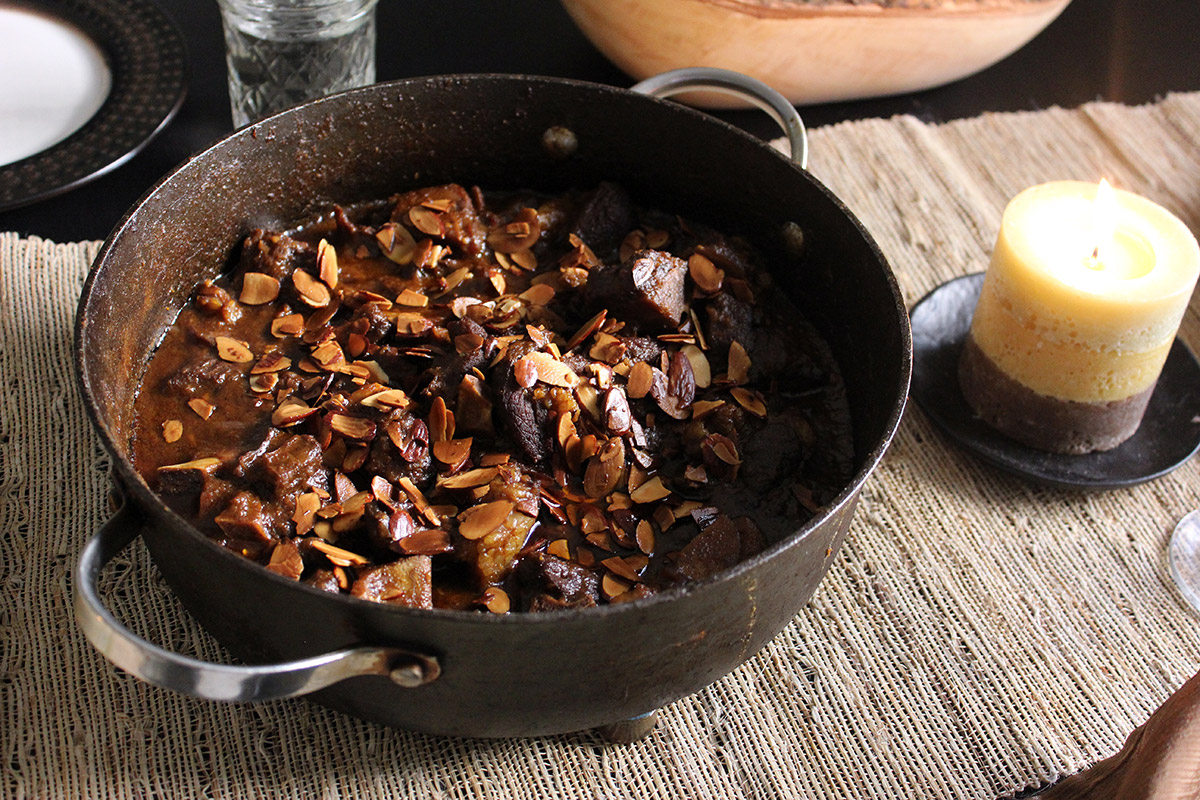
    As a lover of both medieval and desi food, I get excited when they collide, as in this dish which is basically a medieval curry. Thanks, Spice Route!

    There are lots of variations, some with chicken, beef, or mutton (or a mixture), some cooked in wine, some in almond milk, some sweetened with sugar and dates, all spiced with cinnamon and cloves. (See this recipe, which sources a few olde receipts). Some were colored red with sandalwood, most garnished with nuts.

    Because of the warm spices and the almonds, I made mine similar to a Mughlai korma, and it turned out rich, fragrant, and lovely.

    As Game of Thrones fare…

    This is the upscale version of bowls of brown – that is if better ingredients were available than stale bread, meat gristle and sewer water! When the hipster noble houses start gentrifying Flea Bottom, you can look for mawmenny establishments to start popping up for sure.

    Note: if you don’t have all the spices, or if you’d rather use beef or chicken than goat, go for it! Medieval chefs are resourceful. This recipe is very versatile, use whatever meat and at least the cinnamon and cloves and you should be good.

    Mawmenny

    • 2 pounds bone-in goat cut into 1 1/2 inch pieces (you can also use lamb, beef, or chicken)
    • 1 cup dry red wine
    • 6 cloves garlic, chopped, divided
    • salt & pepper
    • 2 1/2 medium onions
    • 2 inches ginger, peeled and chopped
    • ground spices: 1 teaspoon garam masala, 1 teaspoon paprika, 1/2 teaspoon turmeric, 1/4 teaspoon nutmeg
    • 4 tablespoons ghee, divided (or you can use half and half butter and oil)
    • whole spices: 1 stick cinnamon, 8 cloves, 2 black cardamoms
    • 1 teaspoon sugar
    • 1/4 cup almonds, ground
    • 1/4 cup almonds, slivered

    Marinate meat in wine, 2 cloves garlic, and generously seasoned with salt and pepper, for at least an hour and ideally over night.

    Grind together onions, 4 cloves garlic, ginger, and ground spices. On medium high, heat 3 tablespoons ghee, and cook the onion mixture, stirring frequently at first and constantly at the end, until liquid has evaporated and the mixture has darkened in color. Crank the heat up to high and add whole spices and the meat (along with the marinade), and cook, stirring, until liquid has mostly evaporated and meat is sealed, being careful not to burn. Add sugar, ground almonds and water to just cover, bring to a boil and lower to a simmer. Cover and simmer, stirring occasionally, until meat is very soft, 2-2 1/2 hours (will be less for chicken, only 20-30 minutes).

    Meanwhile, in a small pan, heat a tablespoon of ghee and fry the slivered almonds, stirring gently, until golden. Remove to a paper towel-lined plate.

    When meat is ready, remove cover, raise heat and thicken up the sauce, stirring frequently. When it’s thick enough, garnish with almonds and serve hot with bread.

    From Game of Thrones menu Queen in the North

  • Smoked Salmon and Cream Cheese Quiche

    This origin story of this quiche came from a time when both my friend and I were fresh off breakups; we were both in the bumming around phase, but were making the best of it by setting up camp on the pull out couch in her living room, knitting, and watching Sex and the City. In other words, being aggressively single. We made this for a fantastic lunch, along with a avocado and grapefruit salad with Dijon dressing, another combo I still make all the time.

    It’s the classic French velvety custard with a salty bite, brightened up with lemon zest. Perfect for breakfast, lunch, or dinner, or, as I most recently made it, for a trip to the vineyard! I sliced this into squares to take with – and can confirm it pairs well with North Carolina whites.

    Smoked Salmon and Cream Cheese Quiche

    • 1 pie crust, homemade or store-bought

    I made the press crust from The Joy of Cooking. The texture will be crumbly vs. flaky, but it is so, so easy to make. Quick instructions: in food processor, combine 1 1/2 c flour, 1 stick unsalted butter, pinch of salt and 2-3 tbsp milk. Press into a pie plate or 9 inch cake pan, crimp the edges if you can be bothered (I prefer mine rustic!) and bake for 18-22 minutes at 400. Brush with an egg yolk and return to oven for 2 min.

    • 4 oz cream cheese, softened
    • 3 eggs
    • 1 cup milk
    • 1/2 cup half and half or cream
    • zest of 1/2 lemon
    • 1 teaspoon coarse salt
    • 4 ounces smoked salmon, cut into slivers
    • 1 teaspoon dried dill
    • 1 tbsp capers, coarsely chopped

    Preheat oven to 350°

    Blend the cream cheese with a hand mixer, until creamy and smooth. Add eggs and blend until combined (cream cheese might be just a little lumpy, that’s ok). Blend in milk, half and half or cream, lemon zest and salt. Fold in salmon, chives, and capers. Pour into pie crust, stir so that the salmon is evenly distributed, and bake for 30-40 minutes, until edges are set and middle is just a little jiggly. Cool for 30 minutes and serve warm or room temp.

  • Margoog

    Margoog

    This is my month to host the MENA Cooking Club; I was excited to volunteer for Qatar because it’s one of the only Middle Eastern countries I’ve actually been to, if only for a layover in Doha on our way to Pakistan. Qatar, may I say your airline is amazing, and extremely accommodating to travelers with babies!

    I had no idea it would be difficult to find Qatari recipes (it’s just Googling, right?), but the recipes I suggested all got rejected, even those straight from a Qatar-based website! There appears to be a lot of misinformation out there (shocking, I know – something on the internet is wrong). And the recipe they decided to use instead says it’s from the Najd region, which is in Saudi Arabia? So who knows 😉

    A little frustrating, but I guess this experience just highlights why Noor’s goal to bring more awareness to Middle Eastern food is valuable. Good job, Noor!

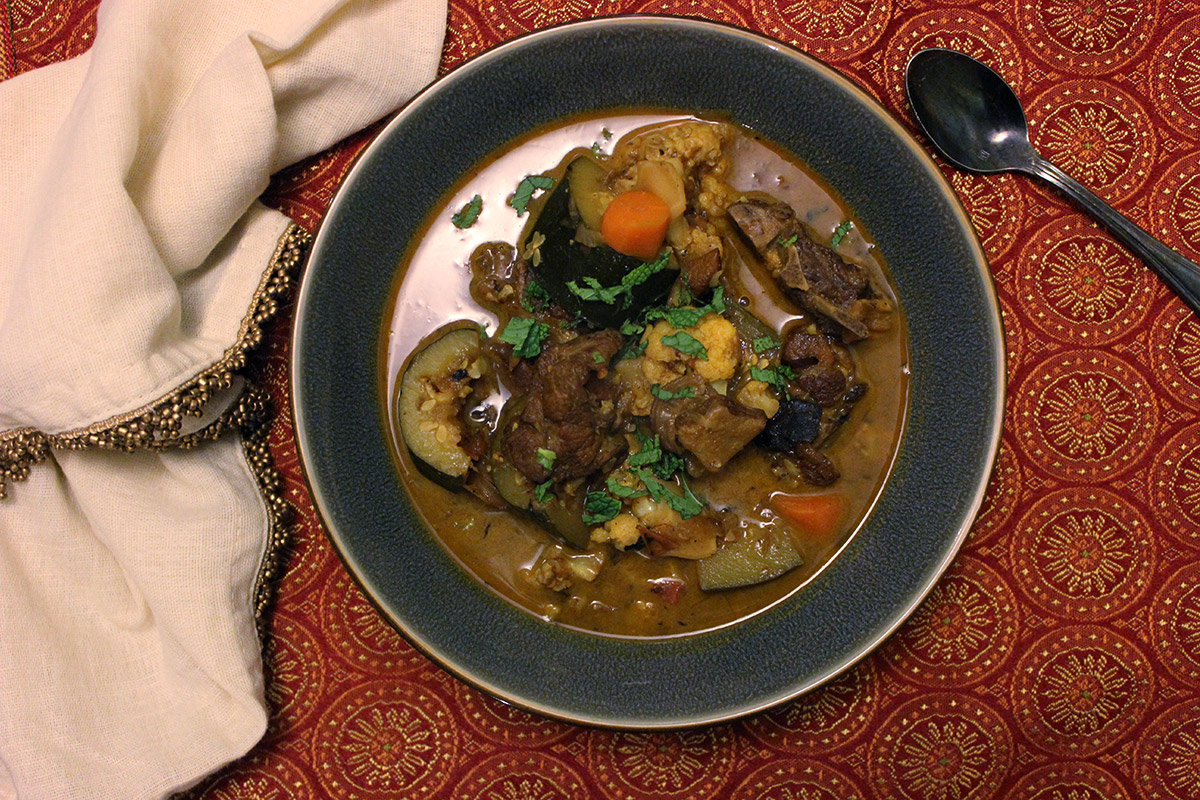
    Anyway, I may be a terrible hostess, but I’m a decent cook, and I love to try new ingredients. This time it was black lemon, which are actually dehydrated limes, and I just loved the flavor they imparted to this dish. I often squirt lemon or lime juice at the end to lighten up a heavy curry; this was the same concept only less sharp, more mellow, the sweet tartness cooked right in. I used three because I didn’t know how strong they would be, and I think it came out well (although I would have liked a fourth for an extra-lemony broth).

    Margoog is traditionally served either poured over thin flatbread (I love the concept of bread soup, see my Spring Ribollita) or else baked with a dough stretched over the top like a pot pie (edit: I misunderstood, it’s actually thin discs of dough that you drop into the hot pot, and they cook in the liquid like dumplings).

    However, I forwent this very important step (blasphemy!) because we’ve just started this low-carb meal plan at home to help my mother-in-law, who is diabetic, get her blood sugar under control. She’s made really good progress, so as much as I would like to make a lovely crust for this fragrant steamy stew (sigh, that sounds like pure comfort food)…I instead added extra vegetables.

    Margoog

    Note: this doesn’t include the dough which is a key part of traditional margoog, if you are interested see this recipe for method

    • 2 pounds bone-in goat, cut by butcher into 1 inch pieces
    • salt & pepper
    • olive oil
    • To flavor the broth: 2 smashed garlic cloves, 1 stick cinnamon, and 3 black lemons, slit
    • 3-4 shallots, sliced
    • 3 cloves garlic
    • 3 medium tomatoes, chopped
    • 1 teaspoon cumin
    • 1 teaspoon coriander
    • 1/2 teaspoon turmeric
    • 1/2 – 1 teaspoon kashmiri chili (less spicy, I did this so kids could eat it) or cayenne (more spicy)
    • 1 head cauliflower, cut/broken into florets
    • 3 carrots, peeled and cut into thick chunks
    • 3 zucchini, cut into thick chunks

    Season goat with salt and pepper. In a heavy-bottomed pot, heat a tablespoon or two of olive oil and brown the goat on both sides, in two batches, removing the first batch to a plate. When they are all browned, deglaze the pot with a little water, then add the rest of the goat back in, plus garlic, cinnamon and black lemons, and water to just cover. Bring to a boil then reduce to a simmer, covered, for an hour to an hour and a half, until goat is very tender, adding more water when necessary.

    Meanwhile, in another cooking vessel (I used a wok), heat another three tablespoons olive oil. Saute shallots until very golden, being careful not to burn. Add garlic and stir for a minute or two, then add tomatoes, cumin, coriander, turmeric, and kashmiri chili. Cook until tomatoes are broken down, thick and jammy, and most of the liquid has evaporated.

    Combine the goat and tomato mixtures in whichever pot is bigger so you have room for all the veggies (I put the goat into my wok). Add cauliflower and carrot and mix well, adding water so they are not quite covered. Cook, covered, for 10 minutes, then add zucchini and cook, covered, 10 more minutes, until all veggies are tender. Simmer uncovered for about 10 more minutes, until stew has thickened up a little (but still a little brothy).

    Garnish with a little chopped mint (optional) and and serve hot!

    This was lovely, but I am wickedly looking forward to pouring leftovers over naan at my desk lunch tomorrow.


  • Pindi Chana

    I saw this recipe and was eager to try it for several reasons:

    1. Cooking with tea – from chamomile cupcakes to Tea Eggs, I’m always excited to cook with tea. In this recipe it stains the chickpeas a deep brown.
    2. Cooking with pomegranate seeds (anardana) – I acquired these for making chapli kebabs, and like adding these little tart and unexpected additions.
    3. Named for Rawalpindi! I’ve been there!

    It turned out quite nice! I love to make a big pot of chickpeas or lentils to have around for a day or two, will definitely add these to the rotation.

    Pindi Chana

    Adapted from Sanjeev Kapoor, mostly because cooking with dried chickpeas require forethought that I don’t have

    For the chana masala

    • 1 tablespoon pomegranate seeds
    • 2 teaspoons coriander seeds
    • 1/2 teaspoon red chili powder
    • 1/2 teaspoons amchoor powder
    • pinch turmeric

    Lightly toast the spices in a dry pan, crush lightly with a mortar and pestle, then set aside

    For the pindi chana

    • 2 cans chickpeas, drained and rinsed
    • 2 teabags
    • Salt
    • 4 tablespoons ghee, divided
    • 1 teaspoon cumin seeds
    • 2 medium onions, sliced
    • 1 tablespoon garlic paste
    • 1 tablespoon ginger paste
    • 1 tablespoon cumin powder
    • 1 tablespoon coriander powder
    • 1 teaspoon red chili powder
    • 1/2 teaspoon turmeric
    • 2 roma tomatoes, quartered
    • 4-6 green chilies, trimmed and slit
    • 1 teaspoon garam masala

    In a medium saucepan, heat the chickpeas, teabags, a good sprinkle of salt, and water to cover. Simmer for 10 minutes and set aside.

    In a heavy-bottomed pot, karahi or wok, heat 3 tablespoons of ghee. Add cumin seeds and heat until they sizzle, then add onions and saute until they are golden brown, stirring often and being careful not to burn. Add garlic paste, ginger paste, cumin, coriander, red chili, and turmeric powders, and saute for another minute or two.

    Add the chickpeas along with a cup or two of the cooking liquid (I started with about a cup and added more as it got a little dry – you want some sauce, but not for it to be soupy).

    In a separate pan, heat a tablespoon ghee. Heat tomato and chilis with a good sprinkle of salt for a minute (crush the tomatoes slightly as they start to break down), then add chana masala and garam masala. Toss the mixture for another minute, then stir into the chickpeas.

    Mix well and cook at a low simmer for 10-15 minutes until it thickens, adding more cooking liquid or water if necessary.

  • Salmon with Pomegranate and Sultana Sauce

    Salmon with Pomegranate and Sultana Sauce

    I am happy to participate in another month of Mena Cooking Club, this month Iraq hosted by Maryam of Maryam’s Culinary Wonders – (she has an impressive recipe index, I’ve bookmarked quite a few to try).

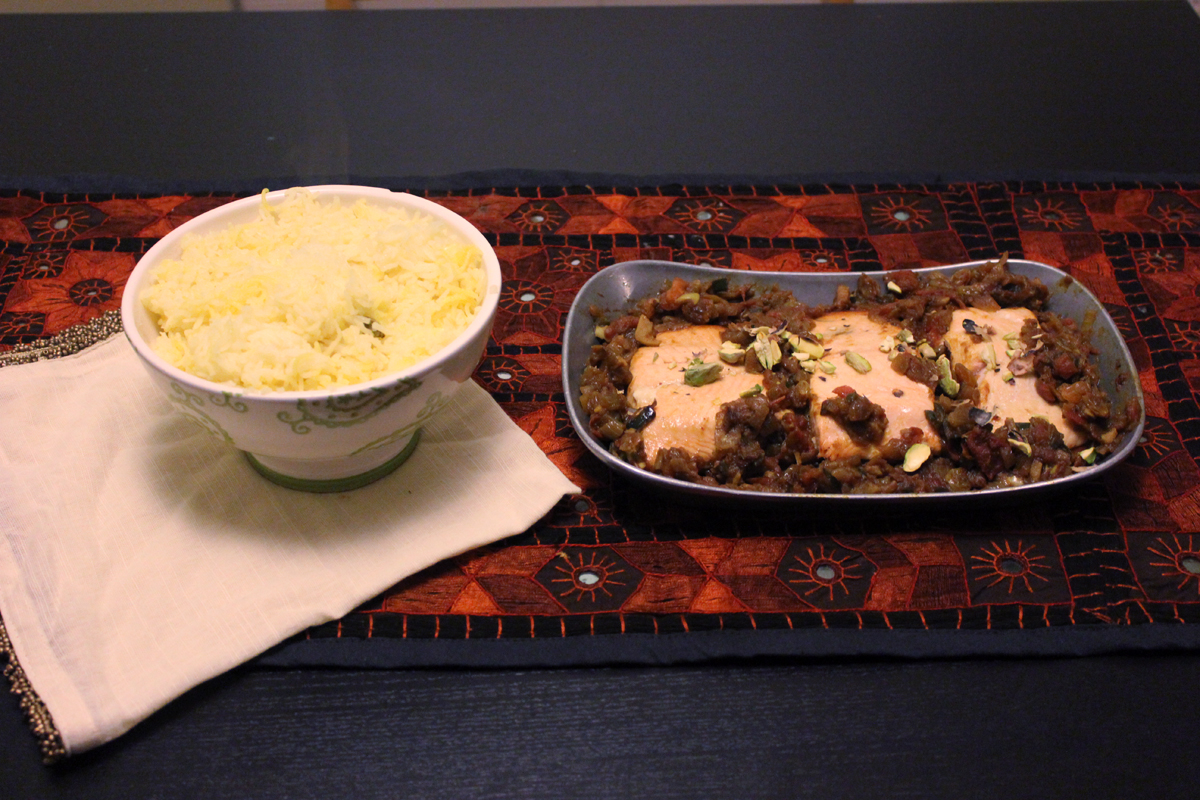
    I jumped on this suggested recipe for two reasons, 1. I need more fish in my life and 2. POMEGRANATE, which I both love, and had some homemade pomegranate syrup (just reduced pomegranate juice, you can also buy it at Middle Eastern markets) leftover from Thanksgiving that I was looking to use. I was a little apprehensive of the sauce, which contains 1/2 cup of raisins along with the spicy and savory ingredients. I personally like raisins but was almost sure my husband would hate them, but to my surprise he really enjoyed the spicy sweet sauce and this dish was a hit.

    I’d definitely make this again, although I would probably either pan-sear the salmon or get it closer to the broiler (it wasn’t hot enough where I had it and I missed that crispiness). Also I’d plate it on top of the sauce but that’s a minor thing. The sauce that I was scared about I’d keep exactly as is.

    The rice was lovely and fragrant – cardamom is my most favorite spice.

    Salmon with Pomegranate Sauce, with Yellow Rice

    Adapted from The Boston Globe

    For the Yellow Rice

    • 2 cups rice
    • 1 tablespoon oil
    • 1/2 teaspoon turmeric
    • 5 cardamom pods
    • 1 cinnamon stick
    • 3 1/2 cups hot water (note, my rice came just a little soggy, so I may reduce to 3 1/4)
    • 1 1/2 teaspoons salt

    Rinse the rice well and soak for at least half an hour. In a pot over medium heat, heat the oil until it shimmers. Add the turmeric, cardamom and cinnamon and stir for a few seconds until fragrant. Stir in the rice, hot water, and salt. Raise the heat to high and boil the rice until visible moisture is absorbed, about 5 minutes. Lower heat to low, and simmer rice, covered, for 20 minutes. Turn the rice gently with a wooden spoon 2 to 3 times while simmering to allow it to fluff.

    For the Pomegranate Sultana Sauce

    • 2 tablespoons oil
    • 2 medium onions, chopped
    • 2 cloves garlic, chopped
    • 1/2 a poblano pepper, chopped
    • 1/2 teaspoon cumin
    • 1/4 teaspoon turmeric
    • 1/4 teaspoon red chili
    • 1 teaspoon ground coriander
    • 2 medium tomatoes, chopped
    • 1 tablespoon pomegranate syrup
    • 1/2 cup sultanas/golden raisins
    • 1/4 cup water

    Heat oil in a pan (I used a nonstick wok), and saute onions with a pinch of salt until very soft and golden. Add garlic and chopped pepper and saute for a few minutes, then add spices (cumin, turmeric, red chili, ground coriander) and stir for a minute. Add tomatoes and another good pinch of salt and saute until tomatoes are completely broken down and almost jammy. Stir in pomegranate syrup, raisins, and 1/4 cup water, and cook for a few minutes until thick. Reserve warm.

    For the Salmon

    • 1 tablespoon mustard
    • 1 tablespoon honey
    • 2 pounds skinless fillet of salmon, divided into 4 portions
    • olive oil
    • Coarse salt, for sprinkling
    • 1/4 cup toasted slivered almonds or chopped pistachios, for garnish

    Turn on the broiler. Line a flat baking pan with aluminum foil, and grease with olive oil. Arrange the fish pieces on the pan, leaving space between them.

    Combine mustard, honey, and a tablespoon of olive oil, and brush the fish with the mixture. Sprinkle with salt. Broil 3-5 minutes each side until fish is lightly cooked through and surface is crisp and golden (like I said, mine wasn’t close enough to broiler, so will make sure to do this next time).

    Spread the warm sauce on a platter and arrange this fish on top. Garnish with almonds or pistachios, and serve with the yellow rice.

  • Pumpkin Quesadillas

    Pumpkin Quesadillas

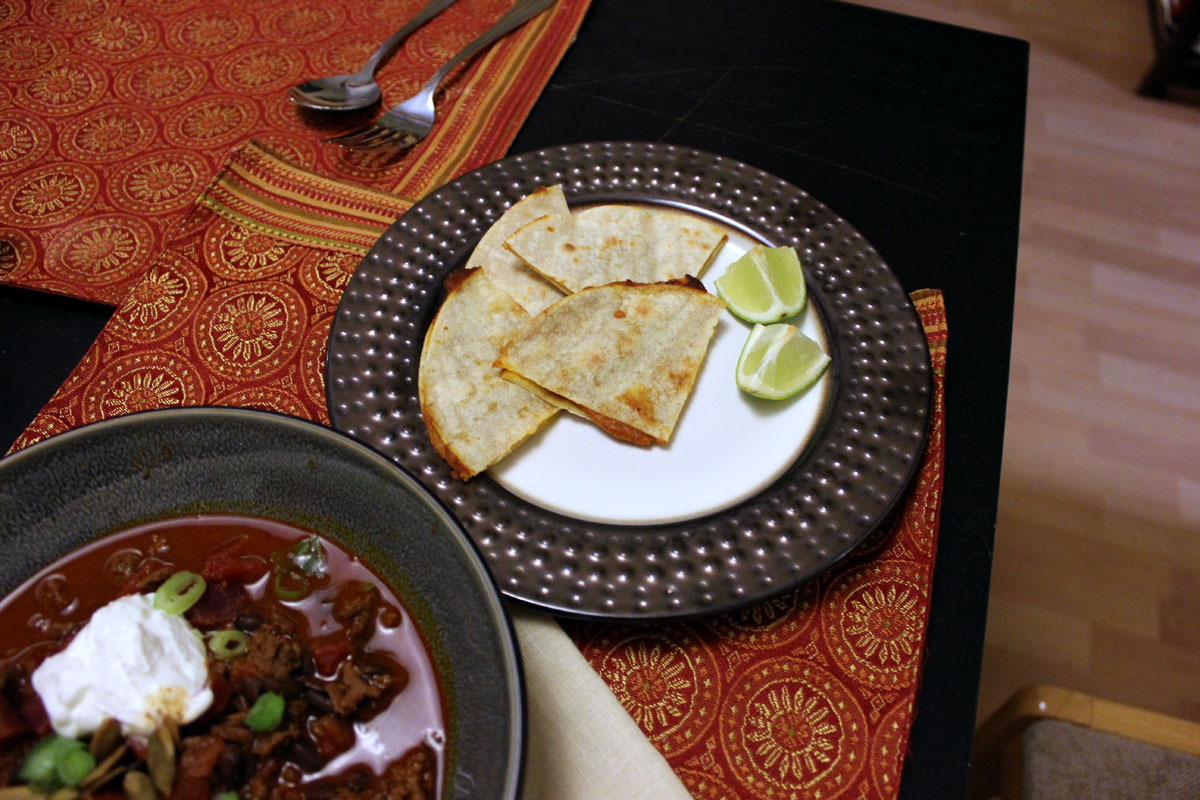
    For the last several years, it’s been a tradition to make pumpkin quesadillas on Halloween – they’re easy, the kids love them, and they go great with Beetroot Chili (or any chili for that matter).

    Pumpkin Quesadillas

    • 4 oz cheddar cheese, or a mix of cheddar and jack, grated
    • 1/4 cup pumpkin puree
    • 1/2 tsp garam masala (or a mix of cumin and cinnamon)
    • 1/2 tsp paprika
    • good pinch cayenne
    • salt & pepper to taste
    • small corn tortillas

    Heat a pan or griddle over medium high heat – I use my tawa 🙂

    Combine cheese, pumpkin, and spices and mix well. Spread a smallish amount over a tortilla and top with another, cook on both sides, flipping, until toasty and brown. Allow to cool slightly then slice in quadrants, serve with salsa/sour cream/chili.

  • Mash o’ Nine Sorts

    Mash o’ Nine Sorts

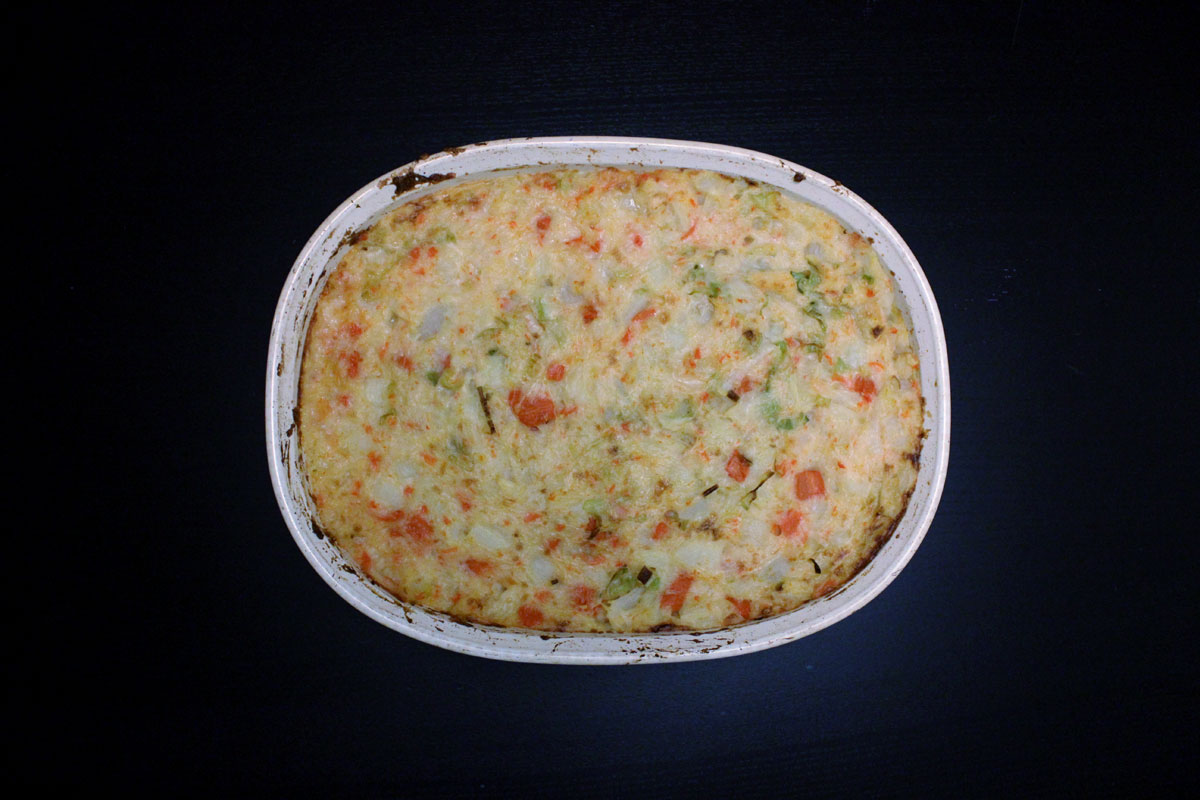
    This month I’ve made a couple of traditional recipes associated with Samhain (namely Irish Boxty and Barm Brack), so here’s an English one for the mix. It has nine ingredients – hence the name – and is also played as a fortunetelling game, with a ring (symbol of marital happiness) hidden inside to be served to a lucky guest.

    For the record, I got the ring, but Zoeya got upset so I re-hid it and she totally by chance got it and was really excited about it. Which is to say, usually in these situations I just tell her to get over it, but I think it’s ok to spoil your kids a little once in awhile to see them smile.

    Mash o’ Nine Sorts

    Slightly adapted from Food.com

    • 2 lbs potatoes, peeled and diced
    • 2 carrots, peeled and diced
    • 1 small turnip, peeled and diced
    • 1 large parsnip, peeled and diced
    • 1 tbsp butter
    • 2 leeks, cleaned and chopped into thin slices, including some of the green tops
    • 6 ounces farmhouse cheddar cheese, grated
    • salt & pepper
    • 2 tablespoons cream (or half & half, which I always have around)

    Heat oven to 350°.

    In a big pot of salted water, bring the potatoes, carrots, turnip and parsnip together to a boil, and cook until soft. Mash them thoroughly (I think it’s supposed to be more uniform but I left it a little lumpy) and season with salt and pepper to taste.

    Heat the butter and saute the leeks for a few minutes until soft. Add to the potato mixture along with the cream and mix. Stir in the grated cheese – and the ring! – and spread in a baking dish. Bake until golden brown, about 30 to 45 minutes.

    We ate this on Friday movie night while watching Frankenweenie.

  • Vampire Slayer Pizza

    Vampire Slayer Pizza

    Everyone knows vampires hate garlic, but there’s also this other little piece of mythology that I feel like I’ve heard a couple of times and keep forgetting, which is that if you scatter seeds in front of a vampire’s grave he will be compelled to count them before returning. The Sesame Street Count is based on this myth – ah, ah, ah!

    vampire-slayer-pizza

    For this reason, I made a super garlicky white pizza, but I also threw nigella seeds in the dough (if the garlic doesn’t keep vampires away from my pizza, they’ll at least have to count for awhile before they get a slice).

    Great for date night (um, if your typical date night is making food and watching movies on the couch after the kids go to bed – woo!), just make sure you both eat some!!

    Vampire Slayer Pizza

    For the dough
    Slightly adapted from Vegan with a Vengeance

    • 1 cup warm water
    • 1 packet (.32 oz) rapid rise yeast
    • 1 1/2 tbsp sugar
    • 3 cups flour
    • 1 tsp salt
    • 1 tbsp garlic powder (NOT garlic salt)
    • 1 tbsp nigella seeds (optional)
    • 2 tbsp olive oil

    In a small bowl, combine the water, yeast, and sugar. Wait for ten minutes until is foamy (if it’s not foamy, yeast dead, use new yeast).

    Meanwhile, combine 2 cups of the flour, salt, garlic powder, nigella seeds and olive oil. Add the water and mix until it forms a very sticky dough – dump out onto a well-floured board (or well-floured counter in my case) and knead, adding flour little by little until it comes together, and afterwards a sprinkle here and there if it gets too sticky to handle. Add just enough to keep from going crazy, otherwise the dough will be heavy and dense. Knead for 10 minutes, then roll into a ball and place in a lightly oiled bowl. Cover with a tea towel and leave it somewhere like the microwave for an hour.

    For the pizza

    • 2 heads garlic, outer paper removed and the top 1/4 inch cut off
    • olive oil
    • salt & pepper
    • 8 oz burrata (2 4 oz balls) or 4 oz each mozzarella and ricotta
    • parsley and red pepper flakes for garnish

    While dough is rising, heat oven to 375° Drizzle each head of garlic with about a teaspoon of olive oil, then sprinkle with salt and pepper. Wrap in foil and roast for 45 minutes to an hour, until very soft and golden.

    At this point, retrieve the dough and knead again for a couple minutes and spread onto prepared baking sheet(s) or stone(s) – you can use one large square baking sheet or two smaller circle ones. Let sit 10 minutes or so while you prepare the rest.

    Heat oven to 500°

    Squeeze garlic cloves from their paper, leaving some mashed and some still with some shape. Strew around the dough. Tear burrata into small pieces (or tear mozzarella and use spoonfuls of ricotta) and strew evenly around dough.

    Bake for 12-15 minutes (mine usually takes around 13) until crust is golden and cheese is bubbly. Let cool and serve, sprinkled with parsley and red pepper flakes.

  • Autumn Moussaka

    Autumn Moussaka

    While I have fallen completely in love with cooking Pakistani and North Indian food, I’ve also long had an interest of traveling a little further up the spice route to explore Middle Eastern and North African cuisines. I love the warm spices, the delicate sweetness of fruit and rosewater, the sweet and savory snacks on the tea table. I’ve dabbled a little bit (come on, I make my own hummus, please) but I want to learn more, which is why I’m very excited about my first month cooking with the MENA Cooking Club.

    Each month is a different country, and everyone cooks one of the recipes the host for that country has chosen. This month is Egypt, hosted by Amira from Arabian Mama. I chose her suggestion, the classic Egyptian Moussaka (Messa’aa).

    In future months I plan to stick almost completely to the particular recipe so I can really learn to cook authentically, but as it’s October and I’m in the middle of a Halloween cooking frenzy, I have a driving compulsion to throw things like pumpkin and hazelnuts into almost everything I make. I didn’t veer very far off course though (this is based on Kitchen Nani’s Egyptian Moussaka), I simply replaced the pine nuts and almonds with toasted hazelnuts, omitted the peppers, and instead of making a béchamel I included layers of pumpkin ricotta for the creamy factor.

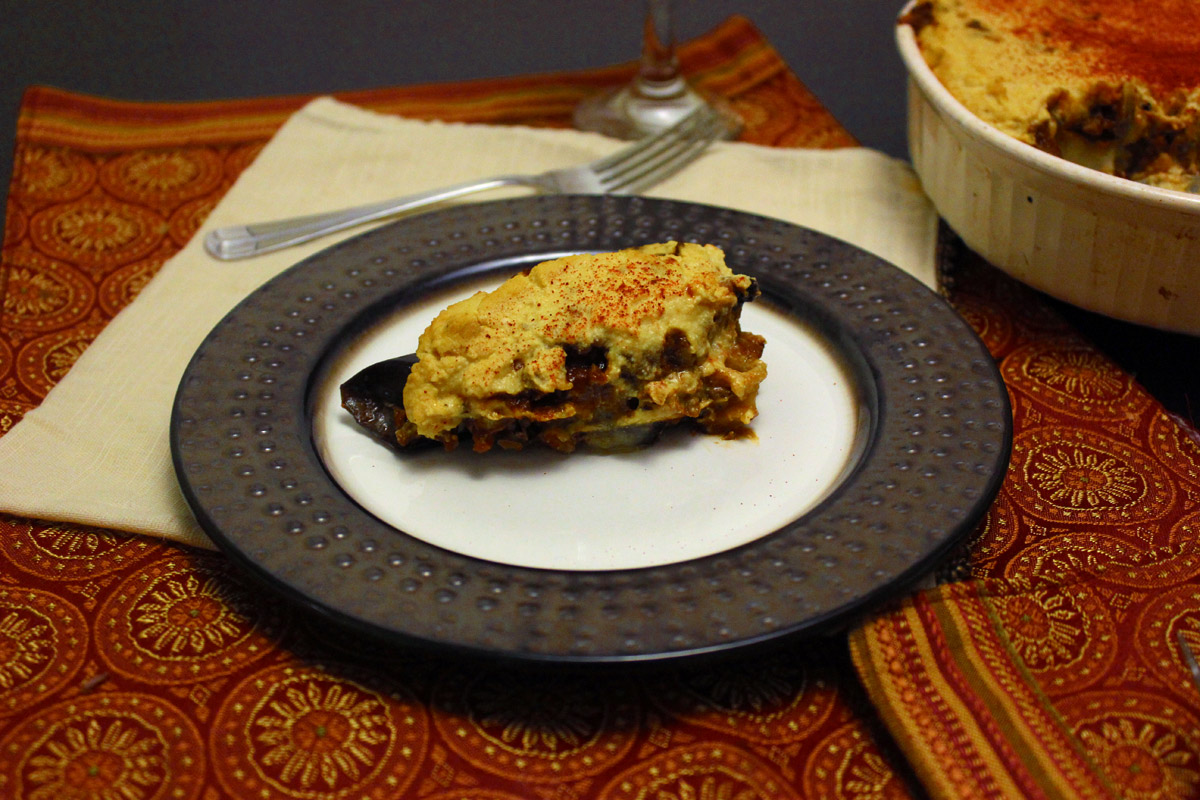
    This was delicious; warm and savory. My little 16 month old gobbled up three servings the other night. It has several components, but they’re all easy to make (especially since I can make lasagne with my eyes closed), and leftovers are fantastic: happy desk lunch.

    Autumn Moussaka

    Adapted from Kichen Nani

    For the eggplant

    • 2 large eggplants, cut into 1.5 inch slices
    • olive oil & sea salt

    Assemble slices on a single layer on two baking sheets, lightly coat with olive oil and sprinkle with sea salt. Roast at 425°, flipping once (and checking everyone once in awhile that they aren’t burning), until golden brown and just a little charred – about 15 minutes each side.

    For the sauce

    • 3 tbsp olive oil
    • 2 garlic cloves, chopped
    • 2 tsp coriander seeds, crushed
    • 2 6oz cans tomato paste
    • salt & pepper
    • 2 sprigs thyme

    Heat olive oil over medium heat (I used a non-stick wok which I think worked well, you’ll end up cooking the tomato paste quite a bit and not have to worry about it sticking) and sauté garlic for a few minutes, then add coriander seeds and sauté for a minute. Add tomato paste, a good pinch of salt and pepper, and cook, stirring, until it is a very deep, almost burnt looking red. Add two cups of water plus the thyme and mix well (I used a whisk to break up all the tomato paste). Simmer on low heat for about 20 minutes, then set aside. Check seasoning, may need more salt.

    For the meat mixture

    • 2 tbsp olive oil
    • 1 large onion, chopped
    • salt & pepper
    • 1 garlic clove, chopped
    • 1 lb ground beef
    • 1.5 tbsp Arabic 7 spice (which I actually had because I had made for another recipe, yay!) or a mixture of cumin, coriander, paprika, cloves and cinnamon
    • 2 tbsp raisins or currants

    Heat olive oil over medium hight heat and sauté onion with salt and pepper until translucent, then add garlic and sauté another couple of minutes. Slide onions to the side and crank the heat up to high, and brown the ground beef with another good sprinkle of salt. Add spices and stir for a few minutes, until meat is well cooked through, then remove from heat and stir in raisins or currants.

    For the moussaka

    • 15 oz ricotta cheese
    • 1 cup pumpkin or butternut squash puree
    • salt & pepper
    • olive oil
    • 1/2 cup hazelnuts, toasted and chopped (I crushed them with the back of my knife then chopped them)
    • eggplant (above)
    • sauce (above)
    • meat mixture (above)

    Combine ricotta, pumpkin, salt and pepper to taste and mix well with a spatula. I also went ahead and mixed the sauce and the meat together, although you could layer separately.

    In a casserole dish (I lightly greased it with olive oil, probably not necessary but I would hate to spend all this effort then burn my eggplants to the bottom), layer half the eggplants, then spread half the meat/sauce mixture, sprinkle half the hazelnuts, and spread half the ricotta/pumpkin mixture (a spatula works well). Repeat with the other half of the ingredients. Reheat the whole thing in a 375° oven.

    Garnish with a sprinkle of paprika and allow to set for a few minutes before serving.